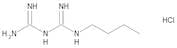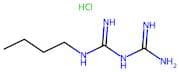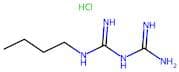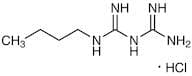
CAS 1190-53-0
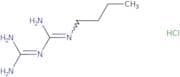
:Buformin hydrochloride
Description:
Buformin hydrochloride is a pharmaceutical compound primarily used as an antihyperglycemic agent in the management of type 2 diabetes mellitus. It belongs to the biguanide class of medications, which also includes metformin. The substance is characterized by its ability to lower blood glucose levels by decreasing hepatic glucose production, enhancing insulin sensitivity, and promoting glucose uptake in peripheral tissues. Buformin hydrochloride is typically administered orally and is known for its relatively rapid onset of action. In terms of physical properties, it is a white to off-white crystalline powder that is soluble in water, making it suitable for formulation in various dosage forms. However, its use has declined in favor of metformin due to concerns about potential side effects, including lactic acidosis. As with any medication, it is essential to consider contraindications and potential interactions with other drugs when prescribing buformin hydrochloride. Overall, while it has therapeutic benefits, careful monitoring and patient selection are crucial for safe use.
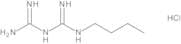
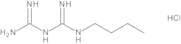
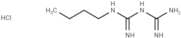
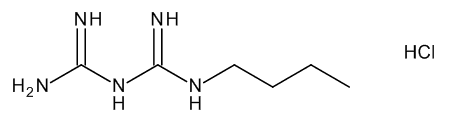
Formula:C6H15N5·ClH
InChI:InChI=1S/C6H15N5.ClH/c1-2-3-4-10-6(9)11-5(7)8;/h2-4H2,1H3,(H6,7,8,9,10,11);1H
InChI key:InChIKey=KKLWSPPIRBIEOV-UHFFFAOYSA-N
SMILES:N(C(NC(=N)N)=N)CCCC.Cl
Synonyms:- 1-Butyl-biguanid hydrochlorid
- 1-Butyl-biguanid hydrochlorid [German]
- 1-Butylbiguanide hydrochloride
- 1-Butyldiguanide hydrochloride
- 2-Butyl-1-(Diaminomethylidene)Guanidine Hydrochloride (1:1)
- Adebit
- Andere
- Biforon
- Biguanide, 1-butyl-, hydrochloride
- Biguanide, 1-butyl-, monohydrochloride
- Bigunal
- Bufonamin
- Buformin hydrochloride
- Buformine HCl
- Bulbonin
- Butyl guanylguanidine
- Butylbiguanide hydrochloride
- DBV hydrochloride
- Diabrin
- Dibetos
- Glibutide
- Gliporal
- Glybutide
- Imidodicarbonimidic diamide, N-butyl-, hydrochloride (1:1)
- Imidodicarbonimidic diamide, N-butyl-, monohydrochloride
- Insulamin
- Krebon
- N(sup 1)-n-Butylbiguanide hydrochloride
- N-Butyl-imidodicarbonimidic diamide monohydrochloride (9CI)
- N-Butylbiguanide hydrochloride
- N<sup>1</sup>-Butyl-biguanide hydrochloride
- N<sup>1</sup>-n-Butylbiguanide hydrochloride
- Nsc 113665
- Nsc 528218
- Panformin
- Sb 103
- Silubin
- Sindiatil
- Tidemol
- W37
- See more synonyms
Sort by
Purity (%)
0
100
|
0
|
50
|
90
|
95
|
100
Found 11 products.
Buformin Hydrochloride
CAS:Formula:C6H15N5·HClPurity:>95.0%(HPLC)Color and Shape:White to Light yellow to Light orange powder to crystalMolecular weight:193.68Buformin hydrochloride
CAS:Controlled ProductFormula:C6H15N5·ClHColor and Shape:NeatMolecular weight:193.68Buformin hydrochloride
CAS:Buformin hydrochloride, an oral biguanide antidiabetic, activates AMPK, enhances insulin sensitivity, and inhibits hepatic glucose production.Formula:C6H16ClN5Purity:97.83%Color and Shape:SolidMolecular weight:193.68Buformin Hydrochloride
CAS:Controlled ProductStability Hygroscopic
Applications Buformin, clinically used for diabetes mellitus, is known to improve resistance to insulin in patients. It suppresses the expression of glyceraldehyde 3-phosphate dehydrogenase.
References Owen, M.,et al.: J. Biochem., 348, 607 (2000), Detaille, D., et al.: Biochem. Pharmacol. 63, 1259 (2002).Formula:C6H15N5·ClHColor and Shape:WhiteMolecular weight:193.68Buformin hydrochloride
CAS:Buformin hydrochloride is an oral hypoglycemic drug that belongs to the group of biguanides. It is used for the treatment of type 2 diabetes mellitus and has been shown to have a hypoglycemic effect in patients with breast cancer. The mechanism of action of buformin hydrochloride is not fully understood, but it may involve the regulation of mitochondrial membrane potential and transcription activators. Buformin hydrochloride has been shown to decrease the number of lymphocytes, which are responsible for immune responses. This drug also inhibits the growth of c. glabrata, an opportunistic fungal pathogen, by disrupting energy metabolism. Buformin hydrochloride is metabolized in humans and animals by glucuronidation or sulfation. In analytical studies, benzalkonium chloride (BAK) was used as a crystalline cellulose carrier to increase solubility and stability.Formula:C6H16ClN5Purity:Min. 95%Color and Shape:White PowderMolecular weight:193.68 g/mol