CAS 1192-14-9
:Cyclobutanone, 2,2-dimethyl-
Description:
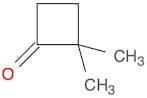
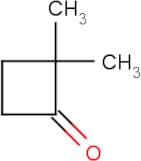
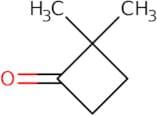
Cyclobutanone, 2,2-dimethyl- (CAS 1192-14-9) is a cyclic ketone characterized by a four-membered carbon ring with a carbonyl group (C=O) and two methyl groups attached to the second carbon atom of the ring. This compound exhibits a unique structure that contributes to its chemical properties, including its reactivity and stability. Cyclobutanones generally have a higher strain due to the small ring size, which can influence their reactivity in various chemical reactions. The presence of the carbonyl group makes it susceptible to nucleophilic attack, allowing for further chemical transformations. Additionally, the bulky dimethyl substituents can affect the steric hindrance and influence the compound's physical properties, such as boiling and melting points. Cyclobutanone derivatives are of interest in organic synthesis and can serve as intermediates in the production of pharmaceuticals and other organic compounds. As with many organic compounds, safety precautions should be taken when handling this substance due to potential health hazards.
Formula:C6H10O
Sort by
Purity (%)
0
100
|
0
|
50
|
90
|
95
|
100
Found 3 products.
Cyclobutanone, 2,2-dimethyl-
CAS:Formula:C6H10OPurity:95%Color and Shape:LiquidMolecular weight:98.14302,2-Dimethylcyclobutan-1-one
CAS:2,2-Dimethylcyclobutan-1-one is a cycloaddition product of sodium methoxide and trimethylchlorosilane. It is used as an alkylating agent in the preparation of fatty acids. 2,2-Dimethylcyclobutan-1-one can be prepared by reaction of zinc chloride with chlorinated hydrocarbons or alkynes. The product can be purified by distillation and deuterated. The reactants are thermally decomposed to form the desired product at elevated temperatures (≥200 °C). The reaction proceeds via nucleophilic substitution of chloride for the chlorine atom that is attached to the alkene. This process generates a new double bond between carbon atoms 4 and 5 in the molecule. Lastly, 2,2-dimethylcyclobutan-1-one has been found to form a complex with anthracene and emulsifying agents that stabilizes it against thermal decomposition.Formula:C6H10OPurity:Min. 95%Color and Shape:Clear LiquidMolecular weight:98.14 g/mol