CAS 1193-63-1
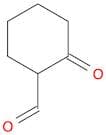
:Cyclohexanecarboxaldehyde, 2-oxo-
Description:
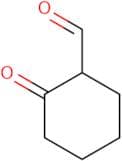
Cyclohexanecarboxaldehyde, 2-oxo- (CAS 1193-63-1), is an organic compound characterized by its cyclic structure and functional groups. It features a cyclohexane ring with a carboxaldehyde group (-CHO) and a ketone group (C=O) at the second position relative to the aldehyde. This compound is typically a colorless to pale yellow liquid with a distinctive odor, often associated with aldehydes. It is soluble in organic solvents and exhibits moderate polarity due to the presence of the polar functional groups. Cyclohexanecarboxaldehyde, 2-oxo- is used in organic synthesis and may serve as an intermediate in the production of various pharmaceuticals and agrochemicals. Its reactivity is influenced by the aldehyde and ketone functionalities, allowing it to participate in various chemical reactions, such as nucleophilic additions and condensation reactions. Safety precautions should be observed when handling this compound, as it may pose health risks if inhaled or ingested.
Formula:C7H10O2
Sort by
Purity (%)
0
100
|
0
|
50
|
90
|
95
|
100
Found 2 products.
2-Oxocyclohexanecarbaldehyde
CAS:Formula:C7H10O2Purity:95%Color and Shape:LiquidMolecular weight:126.15312-Oxocyclohexanecarbaldehyde
CAS:2-Oxocyclohexanecarbaldehyde is a bifunctional carbonyl compound that reacts with amines to form carbinols. It can be used as a cheaper and more environmentally friendly alternative to the use of piperidine. 2-Oxocyclohexanecarbaldehyde also reacts with potassium hydride to form the corresponding ketones. The reaction of 2-oxocyclohexanecarbaldehyde with primary amines leads to isomeric products, depending on the position of substitution on the aromatic ring. This compound has been shown to react electrochemically in an asymmetric synthesis and has been used in the synthesis of morpholine, which is an important intermediate for pharmaceuticals, agrochemicals, and other chemical compounds.
Formula:C7H10O2Purity:Min. 90%Color and Shape:Clear LiquidMolecular weight:126.15 g/molRef: 3D-FO126646
Discontinued product