CAS 1193-69-7
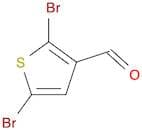
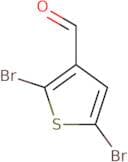
:3-Thiophenecarboxaldehyde, 2,5-dibromo-
Description:
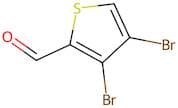
3-Thiophenecarboxaldehyde, 2,5-dibromo- is an organic compound characterized by the presence of a thiophene ring, which is a five-membered aromatic heterocycle containing sulfur. The compound features a carboxaldehyde functional group (-CHO) attached to the thiophene ring, specifically at the 3-position, and two bromine substituents at the 2 and 5 positions of the ring. This substitution pattern can influence the compound's reactivity, stability, and physical properties. Typically, compounds like this exhibit moderate solubility in organic solvents and may have distinct aromatic characteristics due to the presence of the thiophene moiety. The bromine atoms can enhance the compound's electrophilicity and may also affect its electronic properties, making it useful in various chemical reactions, including electrophilic aromatic substitution. Additionally, the presence of the aldehyde group allows for further functionalization, making it a valuable intermediate in organic synthesis and materials science. Safety data should be consulted for handling, as halogenated compounds can pose health risks.
Formula:C5H2Br2OS
Sort by
Purity (%)
0
100
|
0
|
50
|
90
|
95
|
100
Found 3 products.
3-Thiophenecarboxaldehyde, 2,5-dibromo-
CAS:Formula:C5H2Br2OSPurity:95%Color and Shape:SolidMolecular weight:269.94182,5-Dibromothiophene-3-Carbaldehyde
CAS:2,5-Dibromothiophene-3-CarbaldehydePurity:99%Molecular weight:269.94g/mol2,5-Dibromothiophene-3-carboxaldehyde
CAS:2,5-Dibromothiophene-3-carboxaldehyde is a model complex that has been shown to have acceptor and photophysical properties. It can be used in organic electrochemical polymerization experiments, where it is dipolar and can act as an electron donor. This substance has also been shown to inhibit the rate of polymerization in polymer films. The morphology of 2,5-dibromothiophene-3-carboxaldehyde is determined by electron microscopy. It has a melting point of about 210 degrees Celsius and an electron microscopic efficiency of about 10%.Formula:C5H2Br2OSPurity:Min. 95%Molecular weight:269.94 g/mol