CAS 1194-22-5
:6-Hydroxy-2-methyl-4(1H)-pyrimidinone
Description:
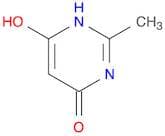
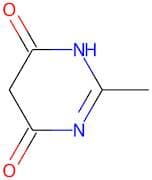
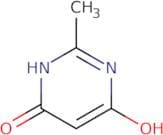
6-Hydroxy-2-methyl-4(1H)-pyrimidinone, with the CAS number 1194-22-5, is a heterocyclic organic compound characterized by a pyrimidine ring structure that features a hydroxyl group and a methyl group. This compound is known for its role in various biochemical processes, particularly in the context of nucleic acid metabolism and as a potential precursor in the synthesis of nucleotides. The presence of the hydroxyl group contributes to its reactivity and solubility in polar solvents, while the methyl group influences its steric properties. 6-Hydroxy-2-methyl-4(1H)-pyrimidinone can exhibit tautomerism, which may affect its chemical behavior and interactions with other molecules. It is also of interest in medicinal chemistry due to its potential biological activities, including antimicrobial and antiviral properties. As with many pyrimidine derivatives, it may participate in hydrogen bonding, which can influence its stability and reactivity in various chemical environments.
Formula:C5H6N2O2
InChI:InChI=1S/C5H6N2O2/c1-3-6-4(8)2-5(9)7-3/h2H,1H3,(H2,6,7,8,9)
InChI key:InChIKey=BPSGVKFIQZZFNH-UHFFFAOYSA-N
SMILES:O=C1C=C(O)N=C(C)N1
Synonyms:- 2-Methyl-4,6-Dihydroxy Pyrimidine
- 2-Methyl-4,6-dihydroxypyrimidine
- 2-Methyl-4,6-hydroxypyrimidine
- 2-Methyl-4,6-pyrimidinediol
- 2-Methyl-Pyrimidine-4,6-Diol
- 4(1H)-Pyrimidinone, 6-hydroxy-2-methyl-
- 4,6-Dihydroxy-2-methylpyrimidine
- 4,6-Dihydroxyl-2-Methylpyrimidine
- 4,6-Pyrimidinediol, 2-methyl-
- 4,6-Pyrimidinediol,2-methyl- (6CI,7CI)
- 6-Hydroxy-2-methyl-4(1H)-pyrimidinone
- 6-Hydroxy-2-methylpyrimidin-4(3H)-one
- See more synonyms
Sort by
Purity (%)
0
100
|
0
|
50
|
90
|
95
|
100
Found 4 products.
4,6-Dihydroxy-2-methylpyrimidine
CAS:Formula:C5H6N2O2Purity:97%Color and Shape:SolidMolecular weight:126.11336-hydroxy-2-methyl-3,4-dihydropyrimidin-4-one
CAS:6-hydroxy-2-methyl-3,4-dihydropyrimidin-4-onePurity:97%Molecular weight:126.11g/mol4,6-Dihydroxy-2-methylpyrimidine
CAS:4,6-Dihydroxy-2-methylpyrimidine is an organic compound that is synthesized by the reaction of 2-chloroethanol with ethyl chloroformate and nitroethane in the presence of a magnesium salt. The synthesis can be done systematically or by chance. 4,6-Dihydroxy-2-methylpyrimidine can be formed by the hydrolysis of ethyl esters with a metallacycle. Its acidic properties are due to its electron withdrawing groups. The systematic synthesis is carried out in two steps: 1) formation of the monomers from ethyl chloroformate and nitroethane; 2) condensation of the monomers to form 4,6-dihydroxy-2-methylpyrimidine. This synthesis requires hydroxide solution and chloroformate as well as a base such as sodium hydroxide or potassium hydroxide. The chemical reaction mechanism is basedFormula:C5H6N2O2Purity:Min. 95%Molecular weight:126.11 g/mol2-Methyl-4,6-dihydroxypyrimidine
CAS:Formula:C5H6N2O2Purity:97.0%Color and Shape:Brown powderMolecular weight:126.115