CymitQuimica logo

CAS 1194-66-7

:

2,6-Dichloronitrosobenzene

Description:
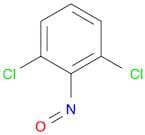
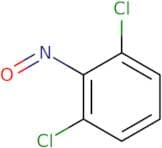
2,6-Dichloronitrosobenzene is an organic compound characterized by the presence of two chlorine atoms and a nitroso group attached to a benzene ring. Its molecular structure features a nitroso group (-NO) bonded to a benzene ring that has chlorine substituents at the 2 and 6 positions. This compound is typically a yellow to orange crystalline solid and is known for its potential applications in organic synthesis and as an intermediate in the production of various chemical compounds. It is important to note that 2,6-Dichloronitrosobenzene may exhibit toxic properties, and appropriate safety measures should be taken when handling it. The compound is also sensitive to light and heat, which can lead to decomposition. In terms of solubility, it is generally more soluble in organic solvents than in water. As with many nitroso compounds, it may pose environmental and health risks, necessitating careful management and disposal in accordance with regulatory guidelines.
Formula:C6H3Cl2NO
InChI:InChI=1/C6H3Cl2NO/c7-4-2-1-3-5(8)6(4)9-10/h1-3H
SMILES:c1cc(c(c(c1)Cl)N=O)Cl
Synonyms:
  • 1,3-Dichloro-2-Nitrosobenzene
Sort by

Purity (%)
0
100
|
0
|
50
|
90
|
95
|
100
Found 2 products.
  • 2,6-Dichloronitrosobenzene

    CAS:
    Formula:C6H3Cl2NO
    Purity:97%
    Color and Shape:Solid
    Molecular weight:176.0001

    Ref: IN-DA000IPL

    1g
    215.00€
    250mg
    133.00€
  • 2,6-Dichloronitrosobenzene

    CAS:
    <p>2,6-Dichloronitrosobenzene is a solvent that is used in the production of textiles and plastics. It can be found as an impurity in solvents such as azobenzene, amines, and nitrosobenzene. 2,6-Dichloronitrosobenzene has been shown to have mutagenic activities and can cause mutations at the base pairs of DNA through mechanisms including oxidative stress and adduct formation with nucleobases. The uptake of this substance by cells may cause cell death due to its high reactivity with cellular components such as proteins and lipids. 2,6-Dichloronitrosobenzene also has a strong pyrylium ionization potential that causes it to form free radicals. 2,6-Dichloronitrosobenzene has been shown to induce cancer in animal models through the activation of carcinogenicity pathways such as p</p>
    Formula:C6H3Cl2NO
    Purity:Min. 95%
    Molecular weight:176 g/mol

    Ref: 3D-BAA19466

    5g
    1,410.00€
    500mg
    396.00€