CAS 1195-93-3
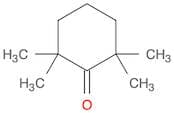
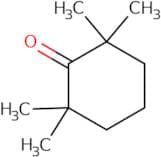
:2,2,6,6-Tetramethylcyclohexanone
Description:
2,2,6,6-Tetramethylcyclohexanone is a cyclic ketone characterized by its unique structure, which includes a cyclohexane ring substituted with four methyl groups at the 2 and 6 positions. This compound is typically a colorless to pale yellow liquid with a distinctive odor. It is known for its relatively high boiling point and low volatility compared to other ketones, making it useful in various applications, including as a solvent and in organic synthesis. The presence of multiple methyl groups contributes to its steric hindrance, which can influence its reactivity and interactions with other chemical species. Additionally, 2,2,6,6-Tetramethylcyclohexanone is stable under normal conditions but may undergo reactions typical of ketones, such as nucleophilic addition. Its solubility in organic solvents and limited solubility in water further define its chemical behavior. Safety data indicates that it should be handled with care, as it may cause irritation upon contact with skin or eyes. Overall, this compound is of interest in both industrial and research settings due to its unique properties.
Formula:C10H18O
InChI:InChI=1S/C10H18O/c1-9(2)6-5-7-10(3,4)8(9)11/h5-7H2,1-4H3
InChI key:InChIKey=PLWBUOOIBTVSNN-UHFFFAOYSA-N
SMILES:O=C1C(C)(C)CCCC1(C)C
Synonyms:- 2,2,6,6-Tetramethylcyclohexanone
- Cyclohexanone, 2,2,6,6-tetramethyl-
Sort by
Purity (%)
0
100
|
0
|
50
|
90
|
95
|
100
Found 2 products.
Cyclohexanone,2,2,6,6-tetramethyl-
CAS:Formula:C10H18OColor and Shape:LiquidMolecular weight:154.24932,2,6,6-Tetramethylcyclohexan-1-one
CAS:2,2,6,6-Tetramethylcyclohexan-1-one is a chemical compound with the molecular formula CHO. It is a colorless liquid that boils around 100°C and has a strong odor. 2,2,6,6-Tetramethylcyclohexan-1-one can be used in the dehydrogenation of alicyclic compounds to form alkenes. The reaction proceeds by attack of the intermediate on the double bond and elimination of two hydrogen atoms from an adjacent methyl group. In this process, one molecule of water is also produced. This reaction mechanism can be postulated for homologues as well.
Formula:C10H18OPurity:Min. 95%Molecular weight:154.25 g/molRef: 3D-BAA19593
Discontinued product