CAS 1196-17-4
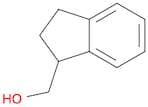
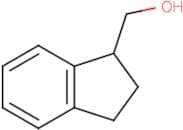
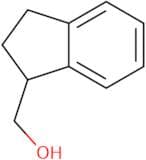
:2,3-dihydro-1H-inden-1-ylmethanol
Description:
2,3-Dihydro-1H-inden-1-ylmethanol, with the CAS number 1196-17-4, is an organic compound characterized by its bicyclic structure, which includes an indene moiety. This compound features a hydroxymethyl group (-CH2OH) attached to the indene framework, contributing to its reactivity and potential applications in organic synthesis. It is typically a colorless to pale yellow liquid at room temperature, exhibiting moderate solubility in polar solvents due to the presence of the hydroxyl group. The compound may participate in various chemical reactions, including oxidation and substitution, making it of interest in the fields of medicinal chemistry and materials science. Its physical properties, such as boiling point and density, can vary based on purity and environmental conditions. Additionally, 2,3-dihydro-1H-inden-1-ylmethanol may exhibit biological activity, although specific pharmacological effects would require further investigation. Safety data should be consulted to ensure proper handling, as with any chemical substance.
Formula:C10H12O
InChI:InChI=1/C10H12O/c11-7-9-6-5-8-3-1-2-4-10(8)9/h1-4,9,11H,5-7H2
SMILES:c1ccc2c(c1)CCC2CO
Synonyms:- 1-Indanmethanol
Sort by
Purity (%)
0
100
|
0
|
50
|
90
|
95
|
100
Found 4 products.
1-(Hydroxymethyl)indan
CAS:<p>1-(Hydroxymethyl)indan is a molecule that contains a 6-chloropurine core. It has been shown to have anti-inflammatory properties and is a potential therapeutic agent for the treatment of inflammatory diseases. The conformation of 1-(hydroxymethyl)indan can be altered by the substitution of chlorine for methoxy groups at positions 2 and 3. This can produce optical isomers, which are chiral molecules with one mirror image and one enantiomer. The optical isomers of 1-(hydroxymethyl)indan have different effects on inflammation and tumor cells, with the (R)-enantiomer being more potent against tumors than its mirror image, the (S)-enantiomer.<br>1-(Hydroxymethyl)indan also has an interesting molecular structure because it contains a furan ring in addition to a phenyl group. Furans are not common in organic chemistry due to their instability, but they are found in nature as components</p>Formula:C10H12OPurity:Min. 95%Molecular weight:148.2 g/mol