CAS 1196-39-0
:Isoquinoline, 4-methyl-
Description:
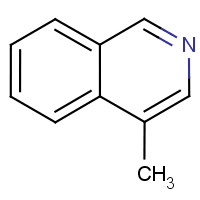
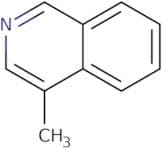
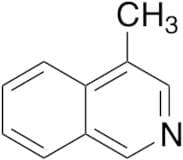
4-Methylisoquinoline is a heterocyclic organic compound characterized by a fused ring structure that includes a benzene ring and a pyridine ring. It is a derivative of isoquinoline, with a methyl group attached to the fourth position of the isoquinoline framework. This compound typically appears as a colorless to pale yellow liquid or solid, depending on its purity and form. It is known for its aromatic properties and can exhibit fluorescence. 4-Methylisoquinoline is soluble in organic solvents such as ethanol and ether but has limited solubility in water. It is often used in organic synthesis and may serve as a building block in the development of pharmaceuticals and agrochemicals. Additionally, it can be involved in various chemical reactions, including electrophilic substitutions and cyclizations. As with many nitrogen-containing heterocycles, it may exhibit biological activity, making it of interest in medicinal chemistry. Proper handling and safety precautions are essential due to its potential toxicity and reactivity.
Formula:C10H9N
InChI:InChI=1/C10H9N/c1-8-6-11-7-9-4-2-3-5-10(8)9/h2-7H,1H3
SMILES:Cc1cncc2ccccc12
Synonyms:- 4-Methylisoquinoline
- 4-Methylisoquinolilne
- Isoquinoline, 4-methyl-
- methyl-4 isoquinoleine
Sort by
Purity (%)
0
100
|
0
|
50
|
90
|
95
|
100
Found 3 products.
4-Methylisoquinoline
CAS:Isomeric 4-methylisoquinoline is a molecule that is structurally similar to protopine and berberine chloride. It has been shown to be an effective photosensitizer for the production of reactive oxygen species (ROS) in cells, which can lead to DNA damage and cell death. The functional groups on this molecule are the chloro group, which is a halogen, and the isoquinoline ring system with two methyl groups. The chemistry of this compound involves alkylation, yielding a new compound with one less methyl group than the original molecule. This process is called enamine formation.Formula:C10H9NPurity:Min. 95%Color and Shape:Yellow PowderMolecular weight:143.19 g/mol