CAS 1196145-03-5
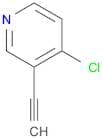
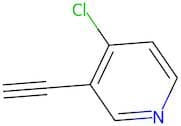
:4-Chloro-3-ethynylpyridine
Description:
4-Chloro-3-ethynylpyridine is an organic compound characterized by its pyridine ring, which is a six-membered aromatic heterocycle containing one nitrogen atom. The presence of a chloro group at the 4-position and an ethynyl group at the 3-position contributes to its unique reactivity and properties. This compound is typically a colorless to pale yellow liquid or solid, depending on its form, and is known for its moderate solubility in organic solvents. It exhibits significant chemical reactivity due to the presence of the ethynyl group, which can participate in various coupling reactions, making it useful in synthetic organic chemistry. Additionally, the chloro substituent can serve as a leaving group in nucleophilic substitution reactions. 4-Chloro-3-ethynylpyridine may also exhibit biological activity, making it of interest in pharmaceutical research. As with many organic compounds, proper handling and safety precautions are essential due to potential toxicity and environmental impact.
Formula:C7H4ClN
InChI:InChI=1S/C7H4ClN/c1-2-6-5-9-4-3-7(6)8/h1,3-5H
InChI key:InChIKey=NVOPIHOTQFRMQJ-UHFFFAOYSA-N
SMILES:C(#C)C=1C(Cl)=CC=NC1
Synonyms:- Pyridine, 4-chloro-3-ethynyl-
- 4-Chloro-3-ethynylpyridine
Sort by
Purity (%)
0
100
|
0
|
50
|
90
|
95
|
100
Found 4 products.
4-Chloro-3-ethynylpyridine
CAS:<p>4-Chloro-3-ethynylpyridine is a cytostatic agent that inhibits the growth of tumor cells by interfering with their ability to proliferate. It is an activator of nicotinamide adenine dinucleotide (NAD) and has been shown to inhibit the synthesis of DNA, RNA, and protein. 4-Chloro-3-ethynylpyridine also prevents cell division by inhibiting metabolic enzymes and transcription factors, which are proteins that regulate gene expression. Furthermore, 4-chloro-3-ethynylpyridine has been shown to induce apoptosis in cancer cells by activating the mitochondrial pathway.</p>Formula:C7H4ClNPurity:Min. 95%Molecular weight:137.56 g/mol