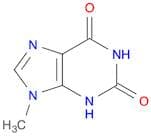
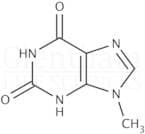
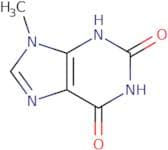
CAS 1198-33-0
:3,9-Dihydro-9-methyl-1H-purine-2,6-dione
Description:
3,9-Dihydro-9-methyl-1H-purine-2,6-dione, commonly known as theobromine, is a methylxanthine compound with notable characteristics. It is a white to off-white crystalline powder that is soluble in water and has a slightly bitter taste. The molecular structure features a purine base, which is a key component in various biological molecules, including DNA and RNA. Theobromine is primarily found in cacao beans and is known for its stimulant properties, similar to caffeine, although it is less potent. It acts as a mild central nervous system stimulant, vasodilator, and diuretic. The compound has various applications, including its use in food products, pharmaceuticals, and as a potential therapeutic agent for certain medical conditions. Additionally, theobromine has been studied for its antioxidant properties and potential health benefits, such as improving cardiovascular health. However, it is important to note that theobromine can be toxic to certain animals, particularly dogs, due to their slower metabolism of the compound.
Formula:C6H6N4O2
InChI:InChI=1S/C6H6N4O2/c1-10-2-7-3-4(10)8-6(12)9-5(3)11/h2H,1H3,(H2,8,9,11,12)
InChI key:InChIKey=DHNIKYWYTSMDDA-UHFFFAOYSA-N
SMILES:O=C1C2=C(NC(=O)N1)N(C)C=N2
Synonyms:- 1H-Purine-2,6-dione, 3,9-dihydro-9-methyl-
- 3,9-Dihydro-9-methyl-1H-purine-2,6-dione
- 9-methyl-3,9-dihydro-1H-purine-2,6-dione
- NSC 4917
- Xanthine, 9-methyl-
- 9-Methylxanthine
Sort by
Purity (%)
0
100
|
0
|
50
|
90
|
95
|
100
Found 4 products.
1H-Purine-2,6-dione, 3,9-dihydro-9-methyl-
CAS:Formula:C6H6N4O2Color and Shape:SolidMolecular weight:166.13749-Methylxanthine
CAS:Controlled Product9-Methylxanthine is a purine alkaloid that is structurally related to caffeine. It is used as a bronchodilator and to treat cardiac arrhythmias. 9-Methylxanthine has been shown to have an effect on the rate of DNA replication by binding to the enzyme xanthosine phosphorylase, which converts xanthosine monophosphate (XMP) to xanthosine diphosphate (XDP). The drug's effect on other nucleobases, such as adenosine monophosphate (AMP), cannot be ruled out. 9-Methylxanthine also has a strong affinity for macrochelates, which are compounds that contain chelating agents with a large number of ethylenediaminetetraacetic acid (EDTA) groups. This property is due to the high number of nitrogen atoms in the molecule and its ability to form hydrogen bonds between water moleculesFormula:C6H6N4O2Purity:Min. 95%Color and Shape:PowderMolecular weight:166.14 g/mol