CAS 120-72-9
:Indole
Description:
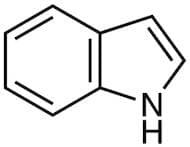
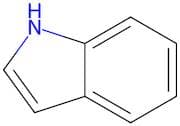
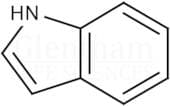
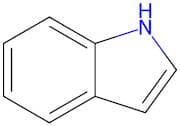
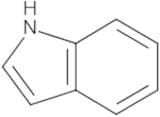
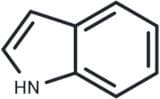
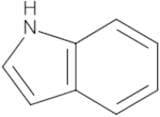
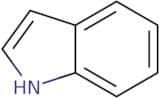
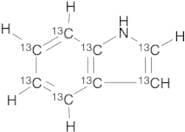
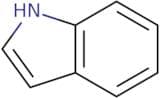
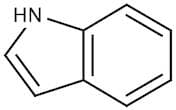
Indole is an aromatic heterocyclic organic compound characterized by a bicyclic structure that consists of a six-membered benzene ring fused to a five-membered nitrogen-containing pyrrole ring. Its molecular formula is C8H7N, and it is known for its distinctive, pleasant odor reminiscent of jasmine. Indole is a colorless to pale yellow solid at room temperature, with a melting point that varies depending on purity. It is soluble in organic solvents such as ethanol and ether but has limited solubility in water. Indole is a key building block in the synthesis of various pharmaceuticals, agrochemicals, and natural products, including the amino acid tryptophan, which is a precursor to serotonin. Additionally, indole exhibits interesting biological activities, including antimicrobial and anticancer properties. Its reactivity is influenced by the nitrogen atom, allowing it to participate in various chemical reactions, such as electrophilic substitution and condensation reactions. Overall, indole is significant in both synthetic and natural chemistry, contributing to a wide range of chemical and biological processes.
Formula:C8H7N
InChI:InChI=1S/C8H7N/c1-2-4-8-7(3-1)5-6-9-8/h1-6,9H
InChI key:InChIKey=SIKJAQJRHWYJAI-UHFFFAOYSA-N
SMILES:C1=2C(NC=C1)=CC=CC2
Synonyms:- 1-Azaindene
- 1-Benzazole
- 1H-Indole
- 2,3-Benzopyrrole
- Benzo[b]pyrrole
- Indol
- Indole, (1-Benzazole)
- Ketole
- Nsc 1964
- Indole
Sort by
Purity (%)
0
100
|
0
|
50
|
90
|
95
|
100
Found 15 products.
Indole
CAS:Formula:C8H7NPurity:>99.0%(GC)Color and Shape:White to Almost white powder to crystalMolecular weight:117.15Indole, 99%
CAS:Indole is used in the preparation of gramine, which is obtained by Mannich reaction dimethylamine and formaldehyde. It is used as a starting material for the preparation of oxindole and indole-3-carboxaldehyde. In Diels-Alder reaction, it acts as dienophile and reacts with 2-aminofuran to get strychFormula:C8H7NPurity:99%Color and Shape:Crystals or powder or crystalline powder or flakes, White to pale creamMolecular weight:117.15Indole
CAS:Acridine (10-azaanthracene) and indole (2,3-benzopyrrole)Formula:C8H7NColor and Shape:White Crystalline PowderMolecular weight:117.05785Indole
CAS:Formula:C8H7NPurity:(GC) ≥ 99.0%Color and Shape:White to beige powder or crystalsMolecular weight:117.151H-Indole
CAS:1H-IndoleFormula:C8H7NPurity:98%Color and Shape: faint red/orange crystalline solidMolecular weight:117.14788g/molIndole
CAS:Indole: aromatic compound with a fused benzene and pyrrole structure, byproduct of tryptophan, found in feces, smells flowery at low concentrations.Formula:C8H7NPurity:99.86%Color and Shape:Solid Solid CrystallineMolecular weight:117.15Indole
CAS:Controlled ProductApplications Indole can be used in perfumes and in the synthesis of tryptophan. This compound is a contaminant of emerging concern (CECs).
Not a dangerous good if item is equal to or less than 1g/ml and there is less than 100g/ml in the packageFormula:C8H7NColor and Shape:NeatMolecular weight:117.15Indole
CAS:Indole is a nitrogen-containing heterocyclic aromatic organic compound. Copper chloride in the presence of trifluoroacetic acid and indole gives rise to an indolenine derivative, which reacts with nitrogen atoms to form a copper nitride. This reaction is used as a model system for biological properties of indole. Indolenine has been shown to have bone cancer prevention and treatment effects in mice, and may also be beneficial in autoimmune diseases and metabolic disorders, due to its ability to inhibit toll-like receptor signaling pathways. The wild-type strain has shown resistance to antibiotics, which can be overcome by using mutant strains that are resistant to antibiotic treatments.Formula:C8H7NPurity:Min. 95 Area-%Color and Shape:Off-White PowderMolecular weight:117.15 g/molIndole
CAS:Indole is a heterocyclic aromatic organic compound. It is a colorless solid that has a strong, unpleasant odor. Indole is classified as a nitrogenous base and is found in many natural products such as the amino acid tryptophan and the alkaloid caffeine. Indole can also be used as a building block for complex molecules, such as pharmaceuticals, herbicides, and pesticides. Indole is soluble in water, but insoluble in most organic solvents. It can be used to synthesize other compounds through reactions with other chemicals or by heating it with different reagents.Formula:C8H7NPurity:Min. 98 Area-%Molecular weight:117.15 g/molIndole crystalline extrapure AR, 99%
CAS:Formula:C8H7NPurity:min. 99%Color and Shape:White ( turns pink on storage), Crystalline powder, Clear, ColourlessMolecular weight:117.15