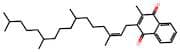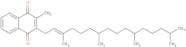
CAS 12001-79-5
:Vitamin K
Description:
Vitamin K refers to a group of fat-soluble vitamins that are essential for various physiological functions, particularly in blood coagulation and bone metabolism. The specific compound associated with the CAS number 12001-79-5 is Phylloquinone, also known as Vitamin K1, which is primarily found in green leafy vegetables and some plant oils. It plays a crucial role in synthesizing proteins required for blood clotting and maintaining bone health. Vitamin K1 is characterized by its lipid-soluble nature, which allows it to be absorbed in the presence of dietary fats. It is sensitive to light and heat, which can affect its stability. In addition to its role in coagulation, Vitamin K is also involved in the regulation of calcium in the bones and blood. Deficiency in Vitamin K can lead to increased bleeding and bone-related issues. Overall, Vitamin K is vital for maintaining proper physiological functions, and its dietary sources are essential for overall health.
Formula:Unspecified
InChI:InChI=1/C31H46O2/c1-22(2)12-9-13-23(3)14-10-15-24(4)16-11-17-25(5)20-21-27-26(6)30(32)28-18-7-8-19-29(28)31(27)33/h7-8,18-20,22-24H,9-17,21H2,1-6H3/b25-20+
Synonyms:- Kanavit
- Vitamine K
- vitamina K
- Vitamin K
- 2-methyl-3-(3,7,11,15-tetramethylhexadec-2-en-1-yl)naphthalene-1,4-dione
- Aqua-mephyton
- Mephyton
- Synkavite
- Konakion
- MeSH ID: D014812
- See more synonyms
Sort by
Purity (%)
0
100
|
0
|
50
|
90
|
95
|
100
Found 3 products.
Vitamin K
CAS:Vitamin K (Kephton) has blood coagulation action and is important for coagulation factors, matrix-Gla protein, and osteocalcin.Purity:97.00% - 99.79%Color and Shape:SolidVitamin K
CAS:Vitamin K is a fat-soluble vitamin, which is primarily sourced from leafy green vegetables, and is also synthesized by gut microbiota. Its mode of action involves functioning as a crucial cofactor for the enzyme gamma-glutamyl carboxylase, which catalyzes the carboxylation of specific glutamic acid residues on proteins required for blood coagulation. This modification enables the calcium-binding capacity of these proteins, facilitating essential physiological processes such as coagulation, bone metabolism, and vascular biology.Formula:C31H46O2Purity:Min. 95%Molecular weight:450.7 g/mol