CAS 120051-54-9
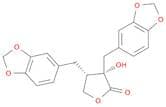
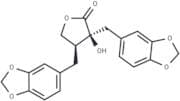
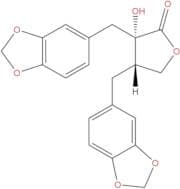
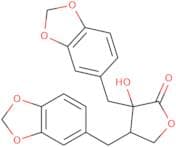
:2(3H)-Furanone,3,4-bis(1,3-benzodioxol-5-ylmethyl)dihydro-3-hydroxy-, (3S,4S)-
Description:
2(3H)-Furanone, 3,4-bis(1,3-benzodioxol-5-ylmethyl)dihydro-3-hydroxy-, (3S,4S)-, is a complex organic compound characterized by its unique structural features, including a furanone ring and multiple benzodioxole substituents. This compound exhibits a chiral center, which contributes to its stereochemistry, specifically in the (3S,4S) configuration. The presence of hydroxyl groups indicates potential for hydrogen bonding, influencing its solubility and reactivity. The benzodioxole moieties may impart aromatic characteristics, enhancing its stability and possibly its biological activity. Such compounds are often studied for their potential applications in pharmaceuticals, agrochemicals, or as intermediates in organic synthesis. The molecular interactions and properties of this substance can be influenced by factors such as pH, solvent polarity, and temperature, making it a subject of interest in both synthetic and medicinal chemistry. Overall, the compound's intricate structure and functional groups suggest a diverse range of chemical behavior and potential applications.
Formula:C20H18O7
Synonyms:- 2(3H)-Furanone,3,4-bis(1,3-benzodioxol-5-ylmethyl)dihydro-3-hydroxy-, (3S-cis)-
- (-)-Meridinol
Sort by
Purity (%)
0
100
|
0
|
50
|
90
|
95
|
100
Found 4 products.
2(3H)-Furanone, 3,4-bis(1,3-benzodioxol-5-ylmethyl)dihydro-3-hydroxy-, (3S,4S)-
CAS:Formula:C20H18O7Purity:98.5%Molecular weight:370.3527Meridinol
CAS:Meridinol has wide antimicrobial activity, includes against gram-positive and gram-negative bacteria and fungi.Formula:C20H18O7Purity:98%Color and Shape:SolidMolecular weight:370.35Meridinol
CAS:Meridinol is a natural antimicrobial compound, which is derived from specific plant sources. This product belongs to a class of phytochemicals known for their ability to interact with microbial cell membranes. The mode of action of Meridinol involves disrupting the integrity of bacterial cell walls, leading to increased permeability and eventual cell death. This disruption is achieved by targeting the lipid bilayer and creating pores that compromise bacterial survival.Formula:C20H18O7Purity:Min. 95%Molecular weight:370.4 g/mol