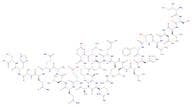
CAS 120066-38-8
:corticotropin releasing factor *fragment 6-33
Description:
Corticotropin-releasing factor (CRF) fragment 6-33 is a peptide derived from the larger corticotropin-releasing hormone, which plays a crucial role in the body's response to stress. This specific fragment consists of amino acids 6 to 33 of the full-length CRF and is known for its involvement in modulating the hypothalamic-pituitary-adrenal (HPA) axis. The CAS number 120066-38-8 identifies this peptide in chemical databases. Characteristically, CRF fragment 6-33 exhibits biological activity related to stress response, influencing the release of adrenocorticotropic hormone (ACTH) from the pituitary gland. It is typically synthesized through solid-phase peptide synthesis and can be utilized in research to study stress-related disorders, neuroendocrine functions, and potential therapeutic applications. The peptide is generally soluble in aqueous solutions and may exhibit specific binding affinities to CRF receptors, contributing to its physiological effects. Overall, CRF fragment 6-33 serves as an important tool in neurobiology and endocrinology research.
Formula:C141H231N41O43S
Synonyms:- CRF (6-33) (human, rat)
- H-Ile-Ser-Leu-Asp-Leu-Thr-Phe-His-Leu-Leu-Arg-Glu-Val-Leu-Glu-Met-Ala-Arg-Ala-Glu-Gln-Leu-Ala-Gln-Gln-Ala-His-Ser-OH
- CORTICOTROPIN RELEASING FACTOR FRAGMENT 6-33, HUMAN, RAT
- CRF (6-33)
- 6-33-Corticotropin-releasing factor (human) (9CI)
- CRF (6-33) (human, rat) H-Ile-Ser-Leu-Asp-Leu-Thr-Phe-His-Leu-Leu-Arg-Glu-Val-Leu-Glu-Met-Ala-Arg-Ala-Glu-Gln-Leu-Ala-Gln-Gln-Ala-His-Ser-OH
- CORTICOTROPIN RELEASING FACTOR FRAGMENT 6-33, HUMA
- CRF(6-33)(human)
- ILE-SER-LEU-ASP-LEU-THR-PHE-HIS-LEU-LEU-ARG-GLU-VAL-LEU-GLU-MET-ALA-ARG-ALA-GLU-GLN-LEU-ALA-GLN-GLN-ALA-HIS-SER
- CORTICOTROPIN-RELEASING FACTOR (6-33) (HUMAN, RAT)
- Corticotropin Releasing Factor Fragment 6-33 human, rat >=97% (HPLC)
Sort by
Purity (%)
0
100
|
0
|
50
|
90
|
95
|
100
Found 4 products.
CRF (6-33) (human, rat)
CAS:This CRF fragment may have two different beneficial effects in Alzheimer’s disease (AD). First CRF (6-33) dissociates CRF from the CRF-binding protein and may therefore be able to restore the dramatic reduction of free CRF content in AD. Second this fragment shows cognition-enhancing properties in animal models of learning and memory, without the characteristic anxiogenic effects of CRF receptor agonists, and may therefore be useful in the treatment of memory deficits seen in AD.Formula:C141H231N41O43SPurity:96.8%Color and Shape:WhiteMolecular weight:3220.7CRF(6-33)(human)
CAS:CRFBP inhibitor peptide; blocks CRF, reduces weight gain, boosts activity in obese rats.Formula:C141H231N41O43SPurity:98%Color and Shape:SolidMolecular weight:3220.68CRF (6-33) (human, rat)
CAS:CRF (6-33) is a neuropeptide that is found in the human cerebral cortex and rat liver. It has been shown to inhibit protein synthesis and sequenced by Edmond H. Fischer, who also discovered corticotropin-releasing factor (CRF). CRF (6-33) binds to its receptor CRFR1, which activates phospholipase C and generates inositol 1,4,5-triphosphate. This leads to the release of calcium from intracellular stores and the activation of protein kinase C. The release of calcium ions into the cytosol causes an increase in intracellular levels of cAMP, which activates a series of reactions responsible for the cellular effects of CRF. CRF (6-33) has been shown to be involved in depression by controlling neurotransmitter levels.br>Formula:C141H231N41O43SPurity:Min. 95%Molecular weight:3,220.66 g/mol