CAS 1200828-74-5
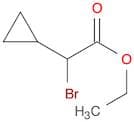
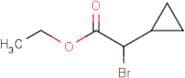
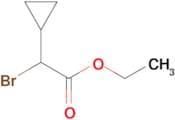
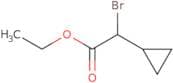
:Ethyl 2-bromo-2-cyclopropylacetate
Description:
Ethyl 2-bromo-2-cyclopropylacetate is an organic compound characterized by its ester functional group, which is derived from acetic acid and ethyl alcohol. The presence of a bromine atom at the second carbon position, along with a cyclopropyl group, contributes to its unique reactivity and properties. This compound typically appears as a colorless to pale yellow liquid with a distinctive odor. It is soluble in organic solvents such as ether and chloroform but has limited solubility in water due to its hydrophobic cyclopropyl moiety. Ethyl 2-bromo-2-cyclopropylacetate is often utilized in organic synthesis, particularly in the formation of more complex molecules through nucleophilic substitution reactions. Its reactivity can be influenced by the presence of the bromine atom, which can serve as a leaving group in various chemical transformations. Safety precautions should be observed when handling this compound, as it may pose health risks if inhaled or ingested, and appropriate protective equipment should be used.
Sort by
Purity (%)
0
100
|
0
|
50
|
90
|
95
|
100
Found 4 products.
Cyclopropaneacetic acid, α-bromo-, ethyl ester
CAS:Formula:C7H11BrO2Purity:95%Color and Shape:LiquidMolecular weight:207.0650Ethyl 2-bromo-2-cyclopropylacetate
CAS:Ethyl 2-bromo-2-cyclopropylacetateFormula:C7H11BrO2Purity:95%Color and Shape: clear. pale yellow liquidMolecular weight:207.07g/molEthyl 2-bromo-2-cyclopropylacetate
CAS:Formula:C7H11BrO2Purity:97%Color and Shape:Liquid, ClearMolecular weight:207.067Ethyl 2-bromo-2-cyclopropylacetate
CAS:Ethyl 2-bromo-2-cyclopropylacetate is a substrate for cross-coupling reactions, which are catalytic reactions in organic synthesis. It can be used as a reactant in the formation of organometallic compounds, pharmaceuticals and other commercially important organic molecules. The reaction mechanism has been studied extensively, with mechanistic studies showing that the reaction proceeds via an initial alkyl-metal exchange followed by nucleophilic attack of the carbonyl group on the metal carbene intermediate. This product is often used in the synthesis of quaternary carbon compounds that have four different substituents attached to a central carbon atom.Formula:C7H11BrO2Purity:Min. 95%Molecular weight:207.07 g/mol