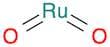
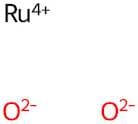
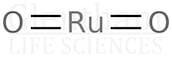
CAS 12036-10-1
:Ruthenium dioxide
- Nw 120
- Nw 47
- Nw 54
- Nw 67
- Oxyde de ruthenium (IV)
- Ruthenia
- Ruthenium dioxide
- Ruthenium dioxide (RuO2)
- Ruthenium dioxide (RuO<sub>2</sub>)
- Ruthenium oxide
- Ruthenium oxide (RuO<sub>2</sub>)
- Ruthenium(IV) dioxide
- Ruthenium(IV)oxid
- Ruthenium-Adams catalyst
- oxido de rutenio (IV)
- ruthenium (IV) oxide
- oxygen(2-)
- Ruthenium (IV) Oxide Anhydrous
- ruthenium, dioxo-
- Ruthenium oxide (RuO2)
- ruthenium(4+)
- See more synonyms
Ruthenium(IV) oxide, anhydrous, 99.9%
CAS:The most often used oxygen catalyst is ruthenium(IV) oxide. It is applied as an electrochemical super capacitor material, and it has high capacity to store charge. RuO2 is used as catalyst in the Deacon process which produces chlorine through the oxidation of hydrogen chloride. Owing to the high c
Formula:O2RuPurity:99.9%Color and Shape:Powder, BlackMolecular weight:133.07Ruthenium(IV) oxide, anhydrous, Premion™, 99.95% (metals basis), Ru 75.2% min
CAS:The most often used oxygen catalyst is ruthenium(IV) oxide. It is applied as an electrochemical super capacitor material, and it has high capacity to store charge. RuO2 is used as catalyst in the Deacon process which produces chlorine through the oxidation of hydrogen chloride. Owing to the high cFormula:O2RuPurity:75.2%Molecular weight:133.07Ruthenium(IV) oxide, anhydrous (99.9+%-Ru)
CAS:Ruthenium(IV) oxide, anhydrous (99.9+%-Ru)
Formula:RuO2Purity:(99.9+%-Ru)Color and Shape:black pwdr.Molecular weight:133.07Ruthenium(IV) oxide
CAS:Ruthenium(IV) oxideFormula:O·RuPurity:99.95%Color and Shape: fine black powderMolecular weight:133.07g/molRuthenium(IV) Oxide Anhydrous
CAS:Controlled ProductApplications Ruthenium(IV) Oxide Anhydrous is a research reagent and applied for exfoliation of layered metal oxide nanosheets.
References Lee, J.M., et al.: App. Mat. Interfaces, 11, 12121 (2019)Formula:O2RuColor and Shape:NeatMolecular weight:133.07Ruthenium dioxide
CAS:Ruthenium dioxide is a chemical compound that can be used as an oxidation catalyst. It is a solid material with high resistance and can be used in the water treatment process as well as in electrochemical processes, such as wastewater treatment. Ruthenium dioxide has been shown to have an acidic reaction mechanism, which is related to the particle size of the substance. The large particle size leads to a higher surface area for catalytic activity. Ruthenium dioxide also has the ability to react with hydrogen gas and form hydrogen bonds. This property makes it useful for electrochemical processes, such as wastewater treatment. Ruthenium dioxide also reacts with cationic surfactants containing boron nitride, which allows it to be used in catalysis and electrochemical processes.
Formula:RuO2Purity:Min. 95%Molecular weight:133.07 g/mol