CAS 1205-88-5
:glycine P-nitroanilide
Description:
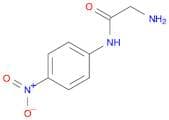
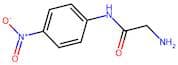
Glycine P-nitroanilide, with the CAS number 1205-88-5, is an organic compound that serves as a reagent in various chemical analyses, particularly in the determination of amino acids. It is characterized by its structure, which includes a glycine moiety linked to a p-nitroaniline group. This compound typically appears as a crystalline solid and is known for its relatively low solubility in water, although it can dissolve in organic solvents. Glycine P-nitroanilide is often utilized in colorimetric assays, where it reacts with specific analytes to produce a colored product, facilitating quantitative analysis. The presence of the nitro group enhances its reactivity and makes it a useful tool in biochemical applications. Additionally, it is important to handle this compound with care, as it may pose health risks if ingested or inhaled, and appropriate safety measures should be observed during its use in laboratory settings.
Formula:C8H9N3O3
InChI:InChI=1/C8H9N3O3/c9-5-8(12)10-6-1-3-7(4-2-6)11(13)14/h1-4H,5,9H2,(H,10,12)
SMILES:c1cc(ccc1NC(=O)CN)N(=O)=O
Synonyms:- H-Gly-pNA
- N-(4-nitrophenyl)glycinamide
Sort by
Purity (%)
0
100
|
0
|
50
|
90
|
95
|
100
Found 4 products.
Glycine 4-nitroanilide
CAS:Glycine 4-nitroanilide, also known as Gly-Pro-pNA, is a compound used in various scientific applications. It is a colorimetric substrate for prolyl endopeptidase, and its enzymatic cleavage releases p-nitroanilide (pNA), which can be quantified. This compound is commonly used in aminopeptidase assays and in the functional characterization and activity determination of post-proline cleaving enzymes (PPCEs).
Additionally, it is mentioned as a substrate for studying soil nitrogen depolymerization, specifically in aminopeptidase assays using nitroanilide substrates.
The compound is also used in studying the catalytic activity of enzymes such as gamma-glutamyltransferase (GGT).Formula:C8H9N3O3Purity:Min. 97 Area-%Color and Shape:Off-White PowderMolecular weight:195.18 g/mol