![Xanthylium,9-[2-carboxy-4(or5)-[[(2,5-dioxo-1-pyrrolidinyl)oxy]carbonyl]phenyl]-3,6-bis(dimethylam…](/_next/image/?url=https%3A%2Fstatic.cymitquimica.com%2Fcas-image%2Fthumb-webp%2F398387-xanthylium-9-2-carboxy-4-or5-25-dioxo-1-pyrrolidinyl-oxy-carbonyl-phenyl-36-bis-dimethylamino-chloride-1-1.webp&w=3840&q=75)
CAS 120718-52-7
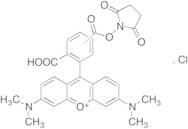
:Xanthylium,9-[2-carboxy-4(or5)-[[(2,5-dioxo-1-pyrrolidinyl)oxy]carbonyl]phenyl]-3,6-bis(dimethylamino)-,chloride (1:1)
Description:
Xanthylium, 9-[2-carboxy-4(or5)-[[(2,5-dioxo-1-pyrrolidinyl)oxy]carbonyl]phenyl]-3,6-bis(dimethylamino)-, chloride (1:1), with CAS number 120718-52-7, is a synthetic organic compound characterized by its complex structure, which includes a xanthylium core, carboxylic acid functionality, and dimethylamino groups. This compound typically exhibits strong chromophoric properties, making it useful in various applications, including dyes and pigments. The presence of the pyrrolidinyl moiety suggests potential biological activity, possibly influencing its solubility and reactivity. As a chloride salt, it is likely to be soluble in polar solvents, which can facilitate its use in various chemical reactions or formulations. The compound's unique structural features may also impart specific optical properties, making it of interest in photonic applications. However, detailed studies on its stability, reactivity, and potential toxicity would be necessary to fully understand its behavior in different environments and applications.
Formula:C29H26N3O7・Cl
Synonyms:- Xanthylium,9-[2-carboxy-4(or 5)-[[(2,5-dioxo-1-pyrrolidinyl)oxy]carbonyl]phenyl]-3,6-bis(dimethylamino)-,chloride (9CI)
- 5(6)-Carboxytetramethylrhodamine B succinimidyl ester
- Tamra
Sort by
Purity (%)
0
100
|
0
|
50
|
90
|
95
|
100
Found 2 products.
TAMRA
CAS:Controlled ProductApplications TAMRA ( T006195) has research application as fluorescent indicator for improved imaging.
References Cho H-J., et al.: J. Controlled Release, 300, 73 (2019)Formula:C29H26N3O7·(Cl)Color and Shape:NeatMolecular weight:563.61TAMRA
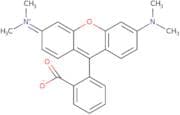
CAS:TAMRA is an analog of the fluorescent dye tetramethylrhodamine that has been used in a variety of medicinal applications. It has been shown to have potent anticancer activity by inhibiting kinase activity, which is critical for cancer cell survival and proliferation. TAMRA has been studied as an inhibitor of several kinases involved in cancer progression, including protein kinase B and extracellular signal-regulated kinase. In addition to its anticancer properties, TAMRA has also been shown to induce apoptosis in Chinese hamster ovary cells and human tumor cells. It can be detected in urine samples, making it useful for diagnostic purposes. Overall, TAMRA represents a promising therapeutic agent for the treatment of cancer and other diseases associated with aberrant kinase activity.Formula:C24H22N2O3Purity:Min. 95%Molecular weight:386.4 g/mol