CAS 121058-82-0
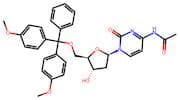
:5'-O-(4,4'-Dimethoxytrityl)-N4-acetyl-2'-deoxycytidine
Description:
5'-O-(4,4'-Dimethoxytrityl)-N4-acetyl-2'-deoxycytidine is a modified nucleoside that plays a significant role in the field of molecular biology and biochemistry, particularly in the synthesis of oligonucleotides. This compound features a deoxycytidine base, which is a building block of DNA, modified at the 5' position with a dimethoxytrityl (DMT) protecting group. The DMT group is commonly used to protect the hydroxyl group during the synthesis of nucleic acids, allowing for selective reactions at other sites. Additionally, the N4-acetyl modification enhances the stability and solubility of the nucleoside. The presence of these modifications contributes to its utility in various applications, including gene synthesis, PCR, and other nucleic acid-based technologies. The compound is typically characterized by its molecular weight, solubility in organic solvents, and stability under specific conditions, making it a valuable tool in synthetic biology and therapeutic development.
Formula:C32H33N3O7
Synonyms:- N4-Acetyl-2'-deoxy-5'-O-DMT-D-cytidine
- N4-Acetyl-5'-O-(4,4'-dimethoxytrityl)-2'-deoxycytidine
- 5'-O-(4,4'-Dimethoxytrityl)-N4-acetyl-2'-deoxycytidine (synthetic)
- Dmt-Ac-dC
- 5'-DMTr-N4-acetyl-2'-deoxycytidine
Sort by
Purity (%)
0
100
|
0
|
50
|
90
|
95
|
100
Found 4 products.
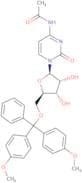
Cytidine, n-acetyl-5'-o-[bis(4-methoxyphenyl)phenylmethyl]-
CAS:Formula:C32H33N3O8Purity:95%Color and Shape:SolidMolecular weight:587.6197N4-Acetyl-5’-O-(4,4’-dimethoxytrityl)-2’-deoxycytidine
CAS:N4-Acetyl-5’-O-(4,4’-dimethoxytrityl)-2’-deoxycytidinePurity:95%N4-Acetyl-5'-O-(4,4'-dimethoxytrityl)-2'-deoxycytidine
CAS:Nucleoside Derivatives –Protectednucleosidesw/NH2/OH openFormula:C32H33N3O8Color and Shape:SolidMolecular weight:587.62Ref: TM-TNU1464
5mgTo inquire10mgTo inquire25mgTo inquire50mgTo inquire100mgTo inquire500mgTo inquireN4-Acetyl-5'-O-DMT-cytidine
CAS:N4-Acetyl-5'-O-DMT-cytidine is an antiviral drug that inhibits the viral DNA polymerase. It is a modified nucleoside, which is activated by phosphorylation. N4-Acetyl-5'-O-DMT-cytidine is used in research for its anticancer properties and has shown to inhibit the growth of cancer cells in vitro. The compound was found to be more potent than cytidine and other modified nucleosides.Formula:C32H33N3O8Purity:Min. 98 Area-%Color and Shape:White PowderMolecular weight:587.63 g/mol
![Cytidine, n-acetyl-5'-o-[bis(4-methoxyphenyl)phenylmethyl]-](/_next/image/?url=https%3A%2Fstatic.cymitquimica.com%2Fproducts%2FIN%2Fthumb%2FDA00749K.jpg&w=3840&q=75)