CAS 1214379-56-2
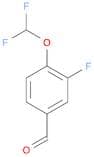
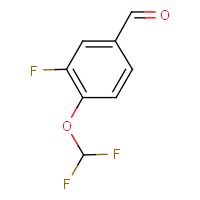
:3-Fluoro-4-Difluoromethoxybenzaldehyde
Description:
3-Fluoro-4-difluoromethoxybenzaldehyde is an organic compound characterized by its aromatic structure, which includes a benzaldehyde functional group. The presence of fluorine atoms introduces unique electronic properties, influencing the compound's reactivity and polarity. The difluoromethoxy group enhances the compound's solubility in polar solvents and may affect its interaction with biological systems, making it of interest in medicinal chemistry. This compound typically exhibits a colorless to pale yellow appearance and has a distinct aromatic odor. Its molecular structure suggests potential applications in the synthesis of pharmaceuticals, agrochemicals, or as an intermediate in organic synthesis. The presence of multiple fluorine substituents can also impart stability and alter the compound's physical properties, such as boiling and melting points. Additionally, the compound's reactivity may be influenced by the electron-withdrawing nature of the fluorine atoms, which can affect electrophilic and nucleophilic reactions. Safety data should be consulted for handling and storage, as fluorinated compounds can exhibit unique toxicological profiles.
Formula:C8H5F3O2
Synonyms:- 4-(Difluoromethoxy)-3-fluorobenzaldehyde
Sort by
Purity (%)
0
100
|
0
|
50
|
90
|
95
|
100
Found 4 products.
4-(Difluoromethoxy)-3-fluorobenzaldehyde
CAS:4-(Difluoromethoxy)-3-fluorobenzaldehydeFormula:C8H5F3O2Purity:≥95%Color and Shape: clear to off white fused solidMolecular weight:190.1193g/mol3-FLUORO-4-DIFLUOROMETHOXYBENZALDEHYD
CAS:Formula:C8H5F3O2Purity:≥95%Color and Shape:SolidMolecular weight:190.1214-(Difluoromethoxy)-3-fluorobenzaldehyde
CAS:4-(Difluoromethoxy)-3-fluorobenzaldehyde is an electrophilic aromatic compound. It is synthesized by the reaction of 4-hydroxybenzaldehyde with an electrophile, such as fluorine. The mechanism of this reaction involves a nucleophilic attack on the carbonyl group from 4-hydroxybenzaldehyde by the electrophile, which forms a hydroxyl group. This electrophilic aromatic compound is toxic to selectively react with other molecules containing hydroxy groups, such as benzene. The reaction process can be performed in two ways: first, by heating in a vacuum and second, by refluxing in water or organic solvents.Formula:C8H5F3O2Purity:Min. 95%Molecular weight:190.12 g/molRef: 3D-PYB37956
Discontinued product