CAS 121574-43-4
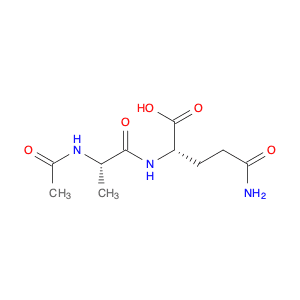
:N-Acetyl-L-alanyl-glutamine
Description:
N-Acetyl-L-alanyl-glutamine is a dipeptide derivative that combines the amino acids L-alanine and L-glutamine with an acetyl group. This compound is characterized by its role in various biochemical processes, particularly in protein synthesis and metabolism. The acetylation of L-alanine enhances its stability and solubility, making it more bioavailable. N-Acetyl-L-alanyl-glutamine is often studied for its potential benefits in nutrition and supplementation, particularly in the context of muscle recovery and immune function. It may also exhibit antioxidant properties, contributing to cellular protection against oxidative stress. The compound is typically soluble in water, which facilitates its use in various formulations. As with many peptides, its stability can be influenced by factors such as pH and temperature. Research into its pharmacological effects is ongoing, with interest in its applications in sports nutrition and therapeutic contexts. Overall, N-Acetyl-L-alanyl-glutamine represents a significant compound in the field of biochemistry and nutrition.
Formula:C10H17N3O5
InChI:InChI=1/C10H17N3O5/c1-5(12-6(2)14)9(16)13-7(10(17)18)3-4-8(11)15/h5,7H,3-4H2,1-2H3,(H2,11,15)(H,12,14)(H,13,16)(H,17,18)
SMILES:CC(C(=NC(CCC(=N)O)C(=O)O)O)N=C(C)O
Synonyms:- N-acetylalanylglutamine
Sort by
Purity (%)
0
100
|
0
|
50
|
90
|
95
|
100
Found 3 products.
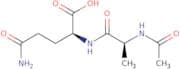
(S)-2-((S)-2-Acetamidopropanamido)-5-amino-5-oxopentanoic acid
CAS:Formula:C10H17N3O5Molecular weight:259.2591N-Acetyl-L-alanyl-L-glutamine
CAS:N-Acetyl-L-alanyl-L-glutamine is a cytosolic protein in the human body. It is essential for the production of glutathione, which is important for maintaining a healthy immune system. N-Acetyl-L-alanyl-L-glutamine has been shown to have antiinflammatory effects and can be used to treat infectious diseases. It was found that this protein binds to leishmania and inhibits its growth by increasing cytosolic Ca2+ levels, leading to cell death. This protein also has antioxidant properties and can protect cells from oxidative damage caused by reactive oxygen species (ROS). N-Acetyl-L-alanyl-L-glutamine reduces glutamate toxicity in tissue culture cells and prevents glutamate induced neuronal injury. The protective effect on neurons may be due to the ability of this protein to inhibit glutamate binding at the NMDA receptor site, thereby preventing Ca2+ influx into neurons.Formula:C10H17N3O5Purity:Min. 95%Color and Shape:White Off-White PowderMolecular weight:259.26 g/mol