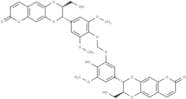
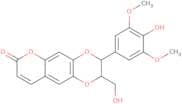
![7H-Pyrano[2,3-g]-1,4-benzodioxin-7-one,2,3-dihydro-3-(4-hydroxy-3,5-dimethoxyphenyl)-2-(hydroxymet…](/_next/image/?url=https%3A%2Fstatic.cymitquimica.com%2Fcas-image%2Fthumb-webp%2F764980-7h-pyrano-23-g-14-benzodioxin-7-one-23-dihydro-3-4-hydroxy-35-dimethoxyphenyl-2-hydroxymethyl-trans-9ci.webp&w=3840&q=75)
CAS 121700-26-3
:7H-Pyrano[2,3-g]-1,4-benzodioxin-7-one,2,3-dihydro-3-(4-hydroxy-3,5-dimethoxyphenyl)-2-(hydroxymethyl)-, trans- (9CI)
Description:
7H-Pyrano[2,3-g]-1,4-benzodioxin-7-one, 2,3-dihydro-3-(4-hydroxy-3,5-dimethoxyphenyl)-2-(hydroxymethyl)-, trans- (9CI), with CAS number 121700-26-3, is a complex organic compound characterized by its unique bicyclic structure that incorporates both a pyran and a benzodioxin moiety. This compound features multiple functional groups, including hydroxyl and methoxy groups, which contribute to its potential biological activity and solubility properties. The presence of these substituents suggests that it may exhibit antioxidant or anti-inflammatory properties, making it of interest in medicinal chemistry and pharmacology. Its stereochemistry, indicated by the "trans-" designation, implies specific spatial arrangements of its substituents, which can influence its reactivity and interactions with biological targets. Additionally, the compound's molecular structure may allow for various synthetic modifications, enhancing its utility in research and potential therapeutic applications. Overall, this compound represents a fascinating area of study within the realm of organic and medicinal chemistry.
Formula:C20H18O8
Sort by
Purity (%)
0
100
|
0
|
50
|
90
|
95
|
100
Found 3 products.
7H-Pyrano[2,3-g]-1,4-benzodioxin-7-one,2,3-dihydro-3-(4-hydroxy-3,5-dimethoxyphenyl)-2-(hydroxymethyl)-, trans- (9CI)
CAS:Formula:C20H18O8Purity:96.5%Molecular weight:386.3521(S)-Moluccanin
CAS:(S)-Moluccanin exhibits anti-bacterial and antiviral activities.Formula:C20H18O8Purity:98%Color and Shape:SolidMolecular weight:386.35Moluccanin
CAS:Moluccanin is a bioactive compound, which is derived from the seeds of the candlenut tree, Aleurites moluccanus. It is classified as a natural antiviral agent obtained from a botanically sourced material. Moluccanin's mode of action involves the inhibition of viral replication mechanisms, targeting specific enzymes essential for virus multiplication, thereby reducing viral load. This mode of action makes it a viable subject for research in developing therapeutic agents against viral infections.Formula:C20H18O8Purity:Min. 95%Molecular weight:386.4 g/mol