CAS 1217769-79-3
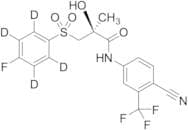
:(S)-Casodex-d4
- (S)-Bicalutamide-d4
- (S)-Casodex-d4
- (2S)-N-[4-Cyano-3-(trifluoromethyl)phenyl]-3-[(4-fluorophenyl-d4)sulfonyl]-2-hydroxy-2-methylpropanamide
(S)-Bicalutamide-D4
CAS:Controlled ProductFormula:C18D4H10F4N2O4SColor and Shape:NeatMolecular weight:434.398(S)-Bicalutamide-d4
CAS:(S)-Bicalutamide-d4 is a potent inhibitor of androgen receptor signaling that is used in the treatment of prostate cancer. It is an analog of bicalutamide, which is a non-steroidal anti-androgen drug that blocks the action of testosterone on cancer cells. (S)-Bicalutamide-d4 has been shown to induce apoptosis in human prostate cancer cell lines and inhibit tumor growth in animal models. It also has inhibitory effects on hyaluronan synthesis and kinase activity, which may contribute to its anti-cancer properties. (S)-Bicalutamide-d4 has been used as a tracer in studies of somatostatin receptors in Chinese hamster ovary cells and urine samples from prostate cancer patients treated with octreotide inhibitors. Its stable isotopic labeling makes it useful for pharmacokinetic studies and metabolic profiling.
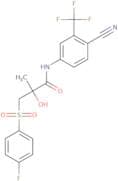
Formula:C18H14F4N2O4SPurity:Min. 95%Molecular weight:434.4 g/mol