CAS 122-20-3
:Triisopropanolamine
Description:
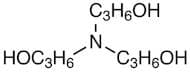
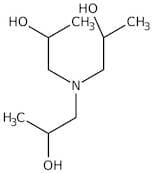
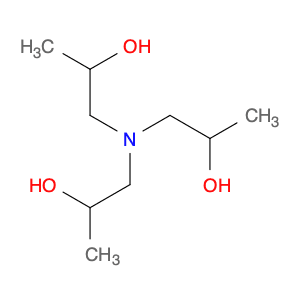
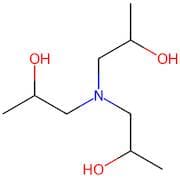
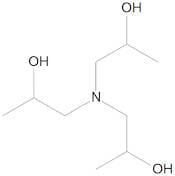
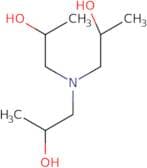
Triisopropanolamine, with the CAS number 122-20-3, is an organic compound characterized by its structure, which includes three isopropanolamine groups. It is a colorless to pale yellow liquid that is hygroscopic and has a mild amine odor. This compound is known for its multifunctional properties, serving as a surfactant, emulsifier, and stabilizer in various applications, including personal care products, pharmaceuticals, and industrial formulations. Triisopropanolamine exhibits good solubility in water and organic solvents, making it versatile in formulation chemistry. It has a relatively high boiling point and low volatility, which contributes to its stability in different environments. Additionally, it can act as a pH adjuster and a corrosion inhibitor, enhancing its utility in formulations. However, like many amines, it may have potential irritant effects on skin and eyes, necessitating appropriate handling and safety measures during use. Overall, triisopropanolamine is valued for its functional properties in both consumer and industrial applications.
Formula:C9H21NO3
InChI:InChI=1/C9H21NO3/c1-7(11)4-10(5-8(2)12)6-9(3)13/h7-9,11-13H,4-6H2,1-3H3/p+1/t7-,8-,9-/m1/s1
InChI key:InChIKey=SLINHMUFWFWBMU-UHFFFAOYSA-N
SMILES:N(CC(C)O)(CC(C)O)CC(C)O
Synonyms:- 1,1',1''-Nitrilotri-2-propanol
- 1,1',1''-Nitrilotripropan-2-ol
- 1,1',1''-Nitrilotripropane-2-Ol
- 1,1',1''-Nitrilotris(2-propanol)
- 1,1′,1′′-Nitrilotri-2-propanol
- 1,1′,1′′-Nitrilotris[2-propanol]
- 1-[Bis(2-hydroxypropyl)amino]propan-2-ol
- 2-Propanol, 1,1',1''-nitrilotri-
- 2-Propanol, 1,1',1''-nitrolotris-
- 2-Propanol, 1,1′,1′′-nitrilotri-
- 2-Propanol, 1,1′,1′′-nitrilotris-
- CBA
- CBA (aminoalcohol)
- NTP
- Nsc 4010
- Tipa
- Tri-2-propanolamine
- Tri-iso-propanolamine
- Triisopropanolamine
- Tris(2-hydroxy-1-propyl)amine
- Tris(2-hydroxypropyl)amine
- Tris(2-propanol)amine
- Tris-(2-Hydroxypropyl)-Amin
- (2S)-2-hydroxy-N-[(2R)-2-hydroxypropyl]-N-[(2S)-2-hydroxypropyl]propan-1-aminium
- (2S)-2-hydroxy-N,N-bis[(2R)-2-hydroxypropyl]propan-1-aminium
- 1,1',1''-nitrilotripropan-2-ol 2-hydroxypropane-1,2,3-tricarboxylate (1:1)
- NITRILOTRIPROPANOL
- 2-hydroxy-N,N-bis(2-hydroxypropyl)propan-1-aminium chloride
- (2R)-2-hydroxy-N,N-bis[(2R)-2-hydroxypropyl]propan-1-aminium
- (2S,2'S,2''R)-1,1',1''-nitrilotripropan-2-ol
- 1,1',1''-NITROLOTRIPROPAN-2-OL
- AMIX TI
- 1,1’,1’’-nitrilotri-2-propano
- 1,1',1-Nitrilopropan-2-ol
- 3,3',3-Nitrilotri(2-propanol)
- 78-96-61,1’,1’’-nitrilotripropan-2-ol
- 78-96-6
- 1,1’,1’’-nitrilotris-2-propano
- 78-96-61,1’,1’’-
- Tripropanolamine
- See more synonyms
Sort by
Purity (%)
0
100
|
0
|
50
|
90
|
95
|
100
Found 7 products.
Triisopropanolamine (mixture of isomer)
CAS:Formula:C9H21NO3Purity:>98.0%(T)Color and Shape:White powder to lumpMolecular weight:191.27Triisopropanolamine, 95%
CAS:Major applications include water-based coating applications and agricultural products. Additional applications are antistat agents for polymers, corrosion inhibitor, electrodeposition/electrocoating, lubricants, paper, pigment dispersion, plastics, polyurethane additive, reaction intermediates, rubbFormula:C9H21NO3Purity:95%Color and Shape:White to yellow, Fused solid or clear liquid as meltMolecular weight:191.271,1',1''-Nitrilotripropan-2-ol
CAS:Formula:C9H21NO3Purity:97%Color and Shape:LiquidMolecular weight:191.26791,1',1''-Nitrilotris(propan-2-ol)
CAS:1,1',1''-Nitrilotris(propan-2-ol)
Purity:0.95Molecular weight:191.27g/molTris(2-hydroxy-1-propyl)amine
CAS:Controlled ProductFormula:C9H21NO3Color and Shape:NeatMolecular weight:191.268Triisopropanolamine (mixture of isomers)
CAS:Triisopropanolamine (TIPA) is a chemical that can be used as a pesticide. TIPA is used to control the growth of bacteria, fungi, and other organisms by disrupting their cell membranes. It is also used in textile industries for its ability to react with anhydrous sodium and glycol ethers to form a polymer that can be applied to fabric for water repellency. TIPA has been shown to be chemically stable at temperatures up to 150-200°C, which makes it useful in applications such as cleaning agents and paper coatings. The use of triisopropanolamine has been shown to inhibit bacterial strains resistant mutant strains of E. coli and Salmonella enterica. TIPA is also known as a precursor for the production of the neurotransmitter Ryanodine. TIPA can be converted into ryanodine via reaction with an acid in the presence of an oxidant such as hydrogen peroxide or potassium permFormula:C9H21NO3Purity:Min. 95%Color and Shape:PowderMolecular weight:191.27 g/mol