CAS 1223498-69-8
:Roniciclib
Description:
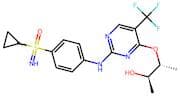
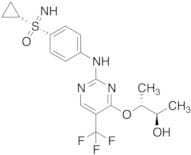
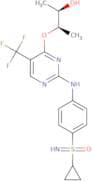
Roniciclib is a small molecule inhibitor primarily targeting cyclin-dependent kinases (CDKs), particularly CDK2 and CDK9, which play crucial roles in cell cycle regulation and transcription. This compound is being investigated for its potential therapeutic applications in various cancers, as it can disrupt the proliferation of cancer cells by inhibiting their growth and survival pathways. Roniciclib is characterized by its specific chemical structure, which includes a core that allows for selective binding to the ATP-binding site of CDKs. Its pharmacological profile suggests that it may exhibit both antitumor activity and a favorable safety margin, although detailed clinical data is necessary to fully understand its efficacy and side effects. The compound is typically administered in a controlled dosage regimen, and ongoing research aims to elucidate its mechanisms of action, optimal dosing strategies, and potential combination therapies with other anticancer agents. As with many investigational drugs, further studies are essential to establish its role in clinical practice.
Sort by
Purity (%)
0
100
|
0
|
50
|
90
|
95
|
100
Found 4 products.
Roniciclib
CAS:Roniciclib (BAY 1000394) is a potent pan-CDK inhibitor and a novel oral cytotoxic agent. Roniciclib inhibits the activity of cell-cycle CDKs CDK1, CDK2, CDK3, CDK4, and of transcriptional CDKs CDK7 and CDK9 with IC(50) values in the range between 5 and 25 nmol/L.Formula:C18H21F3N4O3SPurity:98% - 98.63%Color and Shape:SolidMolecular weight:430.44BAY 1000394
CAS:BAY 1000394 is an investigational drug compound that functions as an oral anticoagulant. It originates from synthetic chemical processes designed to create potent and selective inhibitors of specific targets within the coagulation cascade. The mode of action involves the inhibition of Factor Xa, an essential enzyme in the coagulation pathway that catalyzes the conversion of prothrombin to thrombin, ultimately leading to fibrin clot formation. By targeting Factor Xa, BAY 1000394 effectively reduces the generation of thrombin, thereby diminishing the formation of pathologic clots without markedly altering existing fibrinogen levels.Formula:C18H21F3N4O3SPurity:Min. 95%Molecular weight:430.44 g/mol