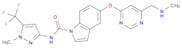
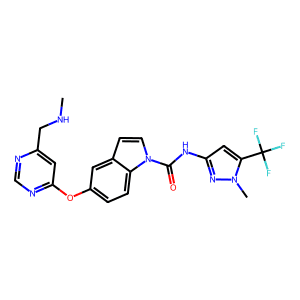
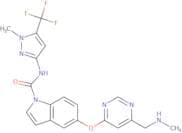
CAS 1229453-99-9
:Acrizanib
Description:
Acrizanib, identified by its CAS number 1229453-99-9, is a small molecule that belongs to the class of compounds known as kinase inhibitors. It is primarily investigated for its potential therapeutic applications in oncology, particularly in the treatment of various cancers by targeting specific signaling pathways involved in tumor growth and proliferation. Acrizanib exhibits a unique mechanism of action by inhibiting certain kinases, which play a crucial role in cell signaling and regulation. The compound is characterized by its ability to selectively bind to its target enzymes, thereby disrupting their activity and leading to reduced tumor cell viability. In terms of physical properties, Acrizanib is typically described as a solid at room temperature, with specific solubility characteristics that may vary based on the solvent used. Its pharmacokinetic profile, including absorption, distribution, metabolism, and excretion, is an important area of study to determine its efficacy and safety in clinical settings. Ongoing research continues to explore its full potential and optimize its use in cancer therapy.
Sort by
Purity (%)
0
100
|
0
|
50
|
90
|
95
|
100
Found 5 products.
Acrizanib
CAS:Acrizanib (LHA510) is a VEGFR-2 inhibitor, with an IC50 of 17.4 nM for BaF3-VEGFR-2.Formula:C20H18F3N7O2Purity:98.71% - 99.64%Color and Shape:SolidMolecular weight:445.4Ref: TM-T5373
1mg105.00€5mg260.00€10mg401.00€25mg685.00€50mg954.00€100mg1,243.00€1mL*10mM (DMSO)286.00€Acrizanib (LHA510)
CAS:Acrizanib is a tyrosine kinase inhibitor that has been shown to reduce the growth of new blood vessels in the eye. Acrizanib inhibits the production of angiogenic growth factors by inhibiting the activity of the VEGF receptor and blocking the binding of VEGF to its receptor. Acrizanib has also been shown to inhibit the activity of other tyrosine kinases, including fibroblast growth factor receptors 1 and 2 (FGFR1 and FGFR2). Acrizanib is administered as an intravitreal injection, which reduces or prevents neovascularization in ocular tissues.
Formula:C20H18F3N7O2Purity:Min. 95%Molecular weight:445.4 g/molRef: 3D-EZB45399
Discontinued product