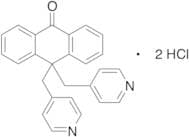
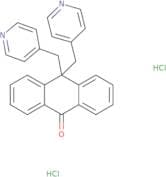
CAS 122955-13-9
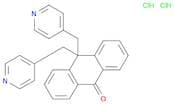
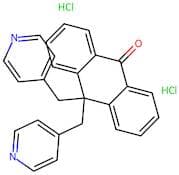
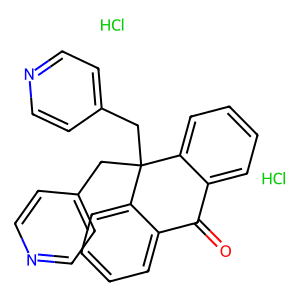
:9(10H)-Anthracenone, 10,10-bis(4-pyridinylmethyl)-, dihydrochloride
Description:
9(10H)-Anthracenone, 10,10-bis(4-pyridinylmethyl)-, dihydrochloride, with CAS number 122955-13-9, is a synthetic organic compound characterized by its anthracenone backbone, which is a polycyclic aromatic ketone. This compound features two 4-pyridinylmethyl groups attached to the 10-position of the anthracenone structure, enhancing its potential for various chemical interactions and applications. The presence of dihydrochloride indicates that the compound exists as a salt, which can influence its solubility and stability in different solvents. Typically, compounds of this nature exhibit properties such as fluorescence and can participate in electron transfer processes, making them of interest in fields like organic electronics and photochemistry. Additionally, the pyridine moieties may impart biological activity, suggesting potential applications in medicinal chemistry. Overall, the unique structural features of this compound contribute to its versatility in research and industrial applications.
Formula:C26H20N2O・2ClH
Sort by
Purity (%)
0
100
|
0
|
50
|
90
|
95
|
100
Found 6 products.
XE 991 dihydrochloride
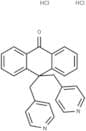
CAS:XE 991 dihydrochloride is a Kv7 (KCNQ) channel blocker.Formula:C26H22Cl2N2OPurity:98.68%Color and Shape:SolidMolecular weight:449.37XE 991 dihydrochloride
CAS:XE 991 dihydrochloride is a small molecule inhibitor, which is an experimental compound used primarily in neuroscience research. It is sourced synthetically and serves as a specific and selective blocker of the K_v7/M (KCNQ) potassium channels. The mode of action of XE 991 dihydrochloride involves binding to these channels, thereby inhibiting their activity and preventing potassium ion flow across neuronal membranes. This results in changes to neuronal excitability and membrane potential.
Formula:C26H20N2O·2HClPurity:Min. 95%Molecular weight:449.37 g/mol