CAS 123-08-0
:4-Hydroxybenzaldehyde
Description:
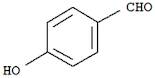
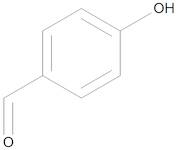
4-Hydroxybenzaldehyde, also known as p-hydroxybenzaldehyde, is an aromatic compound characterized by the presence of both a hydroxyl group (-OH) and an aldehyde group (-CHO) attached to a benzene ring. Its molecular formula is C7H6O2, and it features a phenolic structure, which contributes to its reactivity and solubility properties. This compound is typically a white to light yellow crystalline solid with a distinct aromatic odor. It is soluble in organic solvents such as ethanol and ether, but only slightly soluble in water due to its hydrophobic benzene ring. 4-Hydroxybenzaldehyde is used in various applications, including as an intermediate in the synthesis of pharmaceuticals, dyes, and fragrances. Additionally, it exhibits antioxidant properties and can participate in various chemical reactions, such as electrophilic aromatic substitution and condensation reactions. Safety precautions should be taken when handling this compound, as it may cause irritation to the skin, eyes, and respiratory system.
Formula:C7H6O2
InChI:InChI=1S/C7H6O2/c8-5-6-1-3-7(9)4-2-6/h1-5,9H
InChI key:InChIKey=RGHHSNMVTDWUBI-UHFFFAOYSA-N
SMILES:C(=O)C1=CC=C(O)C=C1
Synonyms:- 4-Formylphenol
- 4-Hidroxibenzaldehido
- 4-Hydroxy Benzaldehyde
- 4-Hydroxybenzaldehyd
- Benzaldehyde, 4-hydroxy-
- Benzaldehyde, p-hydroxy-
- Hydroxybenzaldehyde, p-
- Nsc 2127
- P-Hydroxy Benzaldehyde
- Para Hydroxy Benzaldehyde
- Parahydroxybenzaldehyde
- Phba
- p-Formylphenol
- p-Hydroxybenzaldehyde
- p-Oxybenzaldehyde
- See more synonyms
Filter by
Purity percentage
0
100
|
0
|
50
|
90
|
95
|
100
- Lower prices
- Higher prices
- Lower purities
- Higher purities
- Faster estimated delivery
p-Hydroxybenzaldehyde pure, 99%
CAS:Formula:C7H6O2Purity:min. 99%Color and Shape:White to off white to pale brown, Crystalline powderMolecular weight:122.124-Hydroxybenzaldehyde
CAS:Controlled ProductImpurity Bisoprolol EP Impurity S
Stability Hygroscopic
Applications 4-Hydroxybenzaldehyde (Bisoprolol EP Impurity S) maintains bactericidal activity when tested against certain bacteria strains. It also displays antioxidant potential when analyzed through assay.
References Friedman, M. et al.: J. Food. Prot., 66, 1811 (2003); Liu, L. et al.: Chem. Nat. Comp., 48, 785 (2012);Formula:C7H6O2Color and Shape:NeatMolecular weight:122.12