CAS 123-31-9
:Hydroquinone
Description:
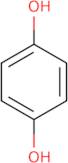
Hydroquinone, with the CAS number 123-31-9, is an organic compound characterized by its aromatic structure, specifically a dihydroxybenzene derivative. It appears as a white crystalline solid and is soluble in water, alcohol, and ether. Hydroquinone is known for its reducing properties and is commonly used as a photographic developer, antioxidant in various applications, and a skin-lightening agent in cosmetics due to its ability to inhibit melanin production. It has a melting point around room temperature and exhibits a slightly sweet taste. Hydroquinone can undergo oxidation to form benzoquinone, which is a more reactive compound. While it is generally considered safe in low concentrations, prolonged exposure or high doses can lead to skin irritation and other health concerns, prompting regulatory scrutiny in some regions. Its use in cosmetic formulations is often subject to concentration limits to mitigate potential adverse effects. Overall, hydroquinone is a versatile compound with significant applications in both industrial and cosmetic fields.
Formula:C6H6O2
InChI:InChI=1/C9H6O4/c10-6-3-5-1-2-9(12)13-8(5)4-7(6)11/h1-4,10-11H
InChI key:InChIKey=QIGBRXMKCJKVMJ-UHFFFAOYSA-N
SMILES:OC1=CC=C(O)C=C1
Synonyms:- 1,4-Benzenediol
- 1,4-Benzoquinol
- 1,4-Dihydroxy benzene
- 1,4-Dihydroxy-benzol
- 1,4-Dihydroxybenzene
- 1,4-Phenylenediol
- 1,4-p-Benzenediol
- 4-Hydroxyphenol
- 6,7-dihydroxy-2H-chromen-2-one
- Aida
- Arctuvin
- Benzene, 1,4-Dihydroxy-
- Benzene-1,4-Diol
- Benzohydroquinone
- Benzoquinol
- Black & White Bleaching Cream
- Bq(H)
- Diak 5
- Dihydroquinone
- Eldopacque
- Eldopaque
- Eldopaque Forte
- Eldoquin
- Eldoquin Forte
- He 5
- Hidroquinona
- Hydrochinon
- Hydroquinol
- Hydroxyquinone
- Nsc 9247
- P-Dihydroxybenzene
- P-Hydroxyphenol
- Phiaquin
- Quinol
- Solaquin Forte
- Solution Q
- Tecquinol
- Tenox HQ
- p-Benzenediol
- p-Dihydroquinone
- p-Dioxybenzene
- p-Hydroquinone
- p-Phenylenediol
- p-Quinol
- Hydroquinone
- HYDROXYQUINOL
- 1,4-Benzenediol (hydroquinone)
- PYROGENTISIC ACID
- 1,4-Dihydroxybenzen
- 1,4-dihydroxybenzen(czech)
- AKOS BBS-00004220
- 1,4-Dihydroxy-benzeen
- p-Djbydroxybenzene
- alpha-hydroquinone
- 1,4-Diidrobenzene
- See more synonyms
Filter by
Purity percentage
0
100
|
0
|
50
|
90
|
95
|
100
- Lower prices
- Higher prices
- Lower purities
- Higher purities
- Faster estimated delivery
Hydroquinone
CAS:Hydroquinone is a phenolic compound that is used as an antioxidant and a photographic chemical. It can be synthesized in two ways: by reduction of benzene or by oxidation of p-hydroxybenzoic acid. Hydroquinone has been shown to have genotoxic effects, which may be due to its ability to generate reactive oxygen species (ROS) and induce oxidation reactions. Hydroquinone also has antimicrobial properties, which are due to the production of ROS in bacterial cells. The redox cycle involves the conversion of hydroquinone into benzene, followed by its reduction back into hydroquinone. This cycle is facilitated by the presence of p-hydroxybenzoic acid and dehydroascorbic acid, which act as electron donors and acceptors. The reaction mechanism involves the transfer of electrons from one molecule to another through a series of intermediates; this process leads to the formation of hydrogen peroxide and superoxide anion radicals.Formula:C6H6O2Purity:Min. 95%Color and Shape:White Clear LiquidMolecular weight:110.11 g/molHydroquinone extrapure AR, 99%
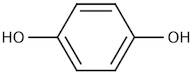
CAS:Formula:C6H6O2Purity:min. 99%Color and Shape:White to off-white, Crystalline powder, ClearMolecular weight:110.11Hydroquinone extrapure AR, ExiPlus, Multi-Compendial, 99%
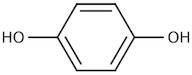
CAS:Formula:C6H6O2Purity:min. 99 %Color and Shape:White to off-white, Crystalline powder, ClearMolecular weight:110.11Hydroquinone pure, 98%
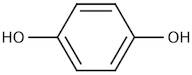
CAS:Formula:C6H6O2Purity:min. 98%Color and Shape:White to off-white, Crystalline powder, Clear, Colourless to pale pinkMolecular weight:110.11