CAS 123-68-2
:Allyl caproate
Description:
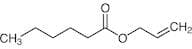
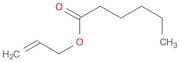
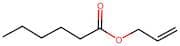
Allyl caproate, with the CAS number 123-68-2, is an organic compound classified as an ester. It is formed from the reaction of allyl alcohol and caproic acid. This substance typically appears as a colorless to pale yellow liquid with a fruity, sweet odor reminiscent of apples or pears, making it useful in flavoring and fragrance applications. Allyl caproate has a relatively low boiling point and is soluble in organic solvents, but it has limited solubility in water. Its chemical structure features a carbon chain that contributes to its characteristic aroma and reactivity. In terms of safety, it is important to handle allyl caproate with care, as it can be an irritant to the skin and eyes. Additionally, it may pose health risks if inhaled or ingested in significant quantities. Overall, allyl caproate is valued in the food and cosmetic industries for its pleasant scent and flavor profile.
Formula:C9H16O2
InChI:InChI=1S/C9H16O2/c1-3-5-6-7-9(10)11-8-4-2/h4H,2-3,5-8H2,1H3
InChI key:InChIKey=RCSBILYQLVXLJG-UHFFFAOYSA-N
SMILES:C(C(OCC=C)=O)CCCC
Synonyms:- 2-Propenyl hexanoate
- Ally caproate
- Allyl Caproate
- Allyl alcohol, hexanoate
- Allyl capronate
- Caproic acid allyl ester
- Hexanoic acid, 2-propen-1-yl ester
- Hexanoic acid, 2-propenyl ester
- Hexanoic acid, allyl ester
- NSC 20962
- Prop-2-En-1-Yl Hexanoate
Sort by
Purity (%)
0
100
|
0
|
50
|
90
|
95
|
100
Found 6 products.
Allyl Hexanoate
CAS:Formula:C9H16O2Purity:>98.0%(GC)Color and Shape:Colorless to Almost colorless clear liquidMolecular weight:156.23Hexanoic acid, 2-propen-1-yl ester
CAS:Formula:C9H16O2Purity:98%Color and Shape:LiquidMolecular weight:156.2221Allyl hexanoate
CAS:Formula:C9H16O2Purity:95.0%Color and Shape:No data available.Molecular weight:156.225Allyl Hexanoate
CAS:Allyl hexanoate is a natural compound that has been used in the formulation of detergent compositions. Allyl hexanoate is a colourless liquid with a pungent odor and can be used as an antimicrobial agent. It is also used as an ingredient in natural compounds for treating liver lesions, fatty acid oxidation, and chronic exposure to caproic acid. It has been shown to have a phase transition temperature of -6°C.
Formula:C9H16O2Purity:Min. 95%Molecular weight:156.23 g/mol