CAS 124199-90-2
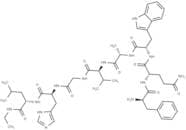
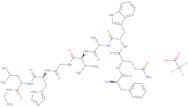
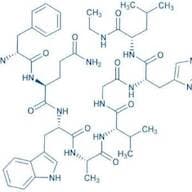
:(D-Phe6,Leu-NHEt13,des-Met14)-Bombesin (6-14)
Description:
(D-Phe6,Leu-NHEt13,des-Met14)-Bombesin (6-14) is a synthetic peptide derived from the natural bombesin peptide, which is known for its role in various physiological processes, including the stimulation of gastric acid secretion and the regulation of gastrointestinal motility. This particular variant features specific amino acid substitutions that enhance its stability and receptor affinity. The presence of D-phenylalanine at position 6 and leucine at position 13 contributes to its biological activity, while the modification at position 14 (des-Met) alters its interaction with bombesin receptors. The ethylamine substitution at position 13 (NHEt) further modifies its pharmacokinetic properties, potentially improving its therapeutic efficacy. This peptide is of interest in research related to cancer biology and neurobiology, as bombesin receptors are often overexpressed in certain tumors. Its CAS number, 124199-90-2, allows for precise identification in chemical databases, facilitating its study in various scientific and medical contexts.
Formula:C49H69N13O9
Synonyms:- D-Phe-Gln-Trp-Ala-Val-Gly-His-Leu-Nhet
Sort by
Purity (%)
0
100
|
0
|
50
|
90
|
95
|
100
Found 3 products.
(D-Phe6,Leu-NHEt13,des-Met14)-Bombesin (6-14)
CAS:(D-Phe6,Leu-NHEt13,des-Met14)-Bombesin (6-14), a bombesin (BBN) antagonist, holds potential for cancer research applications [1].Formula:C49H69N13O9Color and Shape:SolidMolecular weight:984.15(D-Phe6,Leu-NHEt 13,des-Met14)-Bombesin (6-14) trifluoroacetate salt
CAS:Bombesin is a peptide hormone that is secreted by the intestines and the pancreas. Bombesin stimulates the adrenal glands to release adrenaline, which in turn stimulates the bladder to contract. Bombesin has been shown to increase bladder efficiency significantly when given intravenously to patients with chronic urinary retention. This drug also has significant effects on pain syndrome, as it can facilitate or inhibit pain depending on its concentration. Bombesin's mechanism of action is still unclear, but it may work by antagonizing other neurotransmitters like noradrenaline or adrenaline.Formula:C49H69N13O9Purity:Min. 95%Molecular weight:984.15 g/mol(D-Phe⁶,Leu-NHEt¹³,des-Met¹⁴)-Bombesin (6-14)
CAS:[D-Phe⁶, Des-Met¹⁴]bombesin (6-14) ethyl amide (DPDMB), bombesin receptor antagonist with IC₅₀ values for cellular secretion and growth approaching the picomolar region.Formula:C49H69N13O9Purity:> 99%Color and Shape:White PowderMolecular weight:984.17