CAS 125-69-9
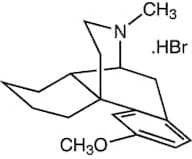
:Dextromethorphan hydrobromide
- (+)-3-Methoxy-17-methyl-morphinan hydrobromide
- (9Alpha,13Alpha,14Alpha)-3-Methoxy-17-Methylmorphinan Hydrobromide
- (9Alpha,13Alpha,14Alpha)-3-Methoxy-17-Methylmorphinan Hydrobromide Hydrate
- 3-Methoxy-17-Methylmorphinan Hydrobromide
- 9α,13α,14α-Morphinan, 3-methoxy-17-methyl-, hydrobromide
- Alpha-dextromethorphan
- Antussan
- Codiphan
- Coldex-D
- Colfed
- Delsym
- Demorphan
- Demorphine
- Destromethorphan hydrobromide
- Detosiv Slow Release
- Dextromethorphan bromide
- Dextromethorphan maleate HBR
- Dextroramin P
- Dormetan
- Dormethan
- Medicon
- Methorate hydrobromide
- Metrorat
- Morphinan, 3-methoxy-17-methyl-, hydrobromide (1:1), (9α,13α,14α)-
- Morphinan, 3-methoxy-17-methyl-, hydrobromide, (9α,13α,14α)-
- Nocuf
- Ro 1-5470
- Romilar
- Tosse Sedativo
- Tusilan
- Tussade
- d-3-Methoxy-N-methylmorphinan hydrobromide
- d-Methorphan hydrobromide
- See more synonyms
Dextromethorphan hydrobromide
CAS:It is used as a potentially useful NMDA receptor agonist. it is usually used as central nervous antitussive, cough suppressant. This is one of the most popular ingredients in over-the-counter cold and cough medications. Dextromethorphan hydrobromide may be added to other preparations to help treatFormula:C18H26BrNOColor and Shape:White, Crystalline powderMolecular weight:352.32Dextromethorphan HBr
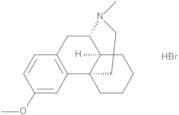
CAS:Formula:C18H25NO·HBrColor and Shape:White To Off-White SolidMolecular weight:271.40 80.91D-Methorphan hydrobromide
CAS:Controlled ProductFormula:C18H25NO·BrHColor and Shape:NeatMolecular weight:352.31Dextromethorphan hydrobromide
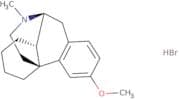
CAS:Controlled ProductDextromethorphan hydrobromide is a drug that has been used to treat cough and cold symptoms. It is also an NMDA receptor antagonist, which blocks the activity of the NMDA receptor. Dextromethorphan hydrobromide is metabolized by the liver into dextrorphan and 3-methoxymorphinan, which are both active metabolites. Dextrorphan is a more potent NMDA receptor antagonist than dextromethorphan. The elimination half-life for dextrorphan is about 2 hours, whereas the elimination half-life for dextromethorphan is about 8 hours. The concentration–time curve for dextrorphan has been shown to be sigmoidal with a long tail, whereas the concentration–time curve for dextromethorphan has been shown to be linear with no long tail. Dextrorphan binds to adenosine A3 receptors in a competitive manner and has been shown
Formula:C18H25NO·HBrPurity:Min. 95%Molecular weight:352.31 g/mol