CAS 125917-60-4
:(2-CHLORO-3-QUINOLINYL)METHANOL
Description:
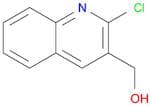
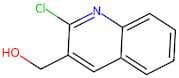
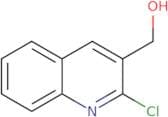
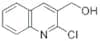
(2-Chloro-3-quinolinyl)methanol, with the CAS number 125917-60-4, is a chemical compound characterized by its unique structure, which includes a quinoline ring system substituted with a chlorine atom and a hydroxymethyl group. This compound typically exhibits properties associated with both aromatic and aliphatic compounds, including potential biological activity due to the presence of the quinoline moiety, which is known for its pharmacological significance. The chlorine substituent can influence the compound's reactivity and solubility, while the hydroxymethyl group may participate in hydrogen bonding, affecting its interactions in biological systems. As a result, (2-chloro-3-quinolinyl)methanol may have applications in medicinal chemistry and could serve as a lead compound for the development of new therapeutic agents. Its synthesis and characterization would involve standard organic chemistry techniques, and its stability and reactivity would be influenced by the electronic effects of the substituents on the quinoline ring.
Formula:C10H8ClNO
InChI:InChI=1/C10H8ClNO/c11-10-8(6-13)5-7-3-1-2-4-9(7)12-10/h1-5,13H,6H2
SMILES:c1ccc2c(c1)cc(CO)c(Cl)n2
Synonyms:- 2-Chloro-3-Hydroxymethylquinoline
- Rarechem Al Bd 0745
- (2-Chloroquinolin-3-Yl)Methanol
Sort by
Purity (%)
0
100
|
0
|
50
|
90
|
95
|
100
Found 4 products.
3-Quinolinemethanol, 2-chloro-
CAS:Formula:C10H8ClNOPurity:95%Color and Shape:SolidMolecular weight:193.6296(2-chloro-3-quinolinyl)methanol
CAS:Formula:C10H8ClNOPurity:95%Color and Shape:SolidMolecular weight:193.632-Chloroquinoline-3-methanol
CAS:2-Chloroquinoline-3-methanol is a synthetic chemical that is dehydrated to form 2,4-dichloroaniline. It is used as an antimycotic and antibacterial agent for the control of test organisms in the laboratory. 2-Chloroquinoline-3-methanol has been shown to react with amines and quinoline derivatives, resulting in an increase in the functional groups on these molecules. The catalytic activity of this compound can be increased by adding a strong base such as potassium hydroxide or sodium methoxide.Formula:C10H8ClNOPurity:Min. 95%Molecular weight:193.63 g/mol