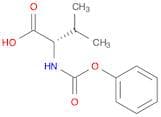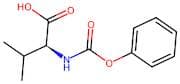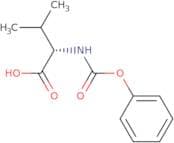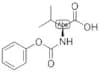
CAS 126147-70-4
:PHENOXYCARBONYL-L-VALINE
Description:
Phenoxycarbonyl-L-valine, with the CAS number 126147-70-4, is a chemical compound that belongs to the class of amino acid derivatives. It features a phenoxycarbonyl group attached to the amino acid L-valine, which is a branched-chain amino acid known for its role in protein synthesis. This compound is characterized by its unique structure that combines the properties of both the phenoxy group and the valine amino acid, potentially influencing its solubility, reactivity, and biological activity. It is typically used in biochemical research and pharmaceutical applications, particularly in the synthesis of peptide-based drugs or as a building block in organic synthesis. The presence of the phenoxy group may enhance the lipophilicity of the compound, affecting its interaction with biological membranes. As with many amino acid derivatives, it may exhibit specific stereochemical properties due to the chiral nature of L-valine, which can influence its biological interactions and efficacy in various applications.
Formula:C12H15NO4
Sort by
Purity (%)
0
100
|
0
|
50
|
90
|
95
|
100
Found 6 products.
L-Valine, N-(phenoxycarbonyl)-
CAS:Formula:C12H15NO4Purity:98%Color and Shape:SolidMolecular weight:237.2518(S)-3-Methyl-2-((phenoxycarbonyl)amino)butanoic acid
CAS:(S)-3-Methyl-2-((phenoxycarbonyl)amino)butanoic acidPurity:98%N-Phenoxycarbonyl-L-valine
CAS:N-Phenoxycarbonyl-L-valine is an impurity that is found in the influenza drug oseltamivir phosphate. This impurity can be detected using electrospray ionization mass spectrometry and has been shown to inhibit the activity of reverse transcriptase, which is a key enzyme in the replication of HIV. N-Phenoxycarbonyl-L-valine has been shown to be active against human and animal viruses, including hepatitis B virus and influenza A virus. It also inhibits the replication of HIV by blocking reverse transcriptase, a crucial enzyme for viral replication. N-Phenoxycarbonyl-L-valine has been shown to be an effective antiviral agent for humans and animals with no adverse effects observed at therapeutic doses.Formula:C12H15NO4Purity:Min. 95%Color and Shape:PowderMolecular weight:237.25 g/mol