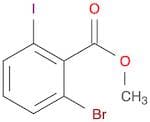
CAS 1261840-81-6
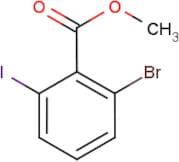
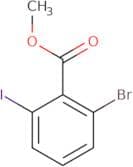
:Methyl 2-bromo-6-iodobenzoate
Description:
Methyl 2-bromo-6-iodobenzoate is an organic compound characterized by its aromatic structure, which includes a benzene ring substituted with both bromine and iodine atoms, as well as a methoxycarbonyl group (the ester functional group). This compound is typically a solid at room temperature and is soluble in organic solvents such as dichloromethane and acetone, but has limited solubility in water due to its hydrophobic aromatic nature. The presence of both halogen substituents (bromine and iodine) on the benzene ring can influence its reactivity, making it a potential candidate for various chemical reactions, including nucleophilic substitutions and coupling reactions. Additionally, the compound may exhibit interesting properties such as fluorescence or specific reactivity patterns due to the electronic effects of the halogens. Its applications can range from use in organic synthesis to potential roles in medicinal chemistry, depending on the specific functionalization and reactivity of the compound. Safety precautions should be taken when handling this substance, as halogenated compounds can pose health risks.
Formula:C8H6BrIO2
Synonyms:- Methyl 2-bromo-6-iodobenzoate
- Benzoic acid, 2-bromo-6-iodo-, methyl ester
Sort by
Purity (%)
0
100
|
0
|
50
|
90
|
95
|
100
Found 4 products.
Methyl 2-bromo-6-iodobenzoate
CAS:Formula:C8H6BrIO2Purity:95%Color and Shape:SolidMolecular weight:340.9405Methyl 2-bromo-6-iodobenzoate
CAS:Methyl 2-bromo-6-iodobenzoateFormula:C8H6BrIO2Purity:95%Color and Shape: faint yellow crystalline powderMolecular weight:340.94g/molMETHYL 2-BROMO-6-IODOBENZOATE
CAS:Formula:C8H6BrIO2Purity:97%Color and Shape:SolidMolecular weight:340.942Methyl 2-bromo-6-iodobenzoate
CAS:Methyl 2-bromo-6-iodobenzoate (MIBI) is a synthetic compound that has been shown to have anti-proliferative effects in vitro and in vivo. MIBI inhibits the proliferation of cancer cells by arresting the cell cycle at G1 phase and inducing apoptosis. It also binds to DNA, which prevents transcription and replication. In addition, it inhibits the production of factor-1, which is a protein that promotes angiogenesis. MIBI has been found to be active against many different types of human cancer cells, including colon carcinoma cells, prostate carcinoma cells, pancreatic adenocarcinoma cells, leukemia cells, lung cancer cells, breast cancer cells, and ovarian cancer cells. These anticancer activities are due to its ability to inhibit cell growth and induce apoptosis.Purity:Min. 95%