CAS 1262860-49-0
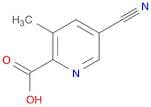
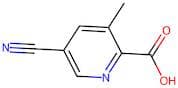
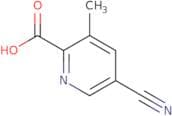
:5-cyano-3-methylpyridine-2-carboxylic acid
Description:
5-Cyano-3-methylpyridine-2-carboxylic acid is an organic compound characterized by its pyridine ring structure, which is a six-membered aromatic ring containing one nitrogen atom. This compound features a cyano group (-C≡N) and a carboxylic acid group (-COOH) attached to the pyridine ring, contributing to its reactivity and potential applications in various chemical reactions. The presence of the methyl group at the 3-position of the pyridine ring influences its electronic properties and steric hindrance. This compound is typically used in synthetic organic chemistry, particularly in the development of pharmaceuticals and agrochemicals, due to its ability to participate in nucleophilic substitutions and other reactions. Its solubility and stability can vary depending on the solvent and conditions, making it important to consider these factors in practical applications. Overall, 5-cyano-3-methylpyridine-2-carboxylic acid is a versatile building block in chemical synthesis, with potential implications in medicinal chemistry and material science.
Formula:C8H6N2O2
Synonyms:- 5-cyano-3-methylpyridine-2-carboxylic acid
- 5-Cyano-3-methylpicolinicacid
- 2-Pyridinecarboxylic acid, 5-cyano-3-methyl-
Sort by
Purity (%)
0
100
|
0
|
50
|
90
|
95
|
100
Found 4 products.
5-Cyano-3-methylpicolinic acid
CAS:Formula:C8H6N2O2Purity:98%Color and Shape:SolidMolecular weight:162.14545-Cyano-3-methylpicolinic acid
CAS:5-Cyano-3-methylpicolinic acidPurity:98%Molecular weight:162.15g/mol5-cyano-3-methylpyridine-2-carboxylic acid
CAS:5-cyano-3-methylpyridine-2-carboxylic acid is a medicinal drug used to treat chronic diseases. It belongs to the group of p-glycoprotein (Pgp) inhibitors, which are trifluoromethylated compounds that are effluxed by Pgp from cells. 5-cyano-3-methylpyridine-2-carboxylic acid has been shown to inhibit BACE1, an enzyme responsible for the production of amyloid beta, which can lead to Alzheimer's disease. This compound also inhibits neural cell growth and nervous system activity in rats. The trifluoromethyl group in this molecule is important for optimization as it increases the affinity for binding with proteins.Formula:C8H6N2O2Purity:Min. 95%Molecular weight:162.14 g/mol