CAS 1268488-70-5
:Bis-PEG9-acid
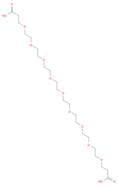
CAS:Bis-PEG9-acid, a cleavable PEG-based linker, is utilized for PROTACs and ADCs synthesis.Formula:C22H42O13Color and Shape:SolidMolecular weight:514.564,7,10,13,16,19,22,25,28-Nonaoxahentriacontane-1,31-dioic acid
CAS:Formula:C22H42O13Purity:97%Molecular weight:514.565Bis-dPEG®21-Acid
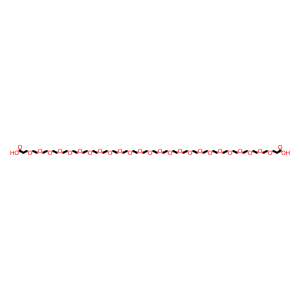
CAS:Bis-dPEG®21-Acid is a PEG polymer categorised as homobifunctional PEG (X-PEG X). Used as a linker, bis-dPEG®21-Acid is used to attached PEG to proteins, peptides, oligonucleotides, nanoparticles and small molecules via pegylation, a bioconjugation technique.Formula:C46H90O25Purity:Min. 95%Molecular weight:1,043.19 g/molBis-dPEG®13-Acid
CAS:Bis-dPEG®13-Acid is a PEG polymer categorised as homobifunctional PEG (X-PEG X). Used as a linker, bis-dPEG®13-Acid is used to attached PEG to proteins, peptides, oligonucleotides, nanoparticles and small molecules via pegylation, a bioconjugation technique.
Formula:C30H58O17Purity:Min. 95%Molecular weight:690.77 g/molBis-dPEG®25-Acid
CAS:Bis-dPEG®25-Acid is a PEG polymer categorised as homobifunctional PEG (X-PEG X). Used as a linker, bis-dPEG®25-Acid is used to attached PEG to proteins, peptides, oligonucleotides, nanoparticles and small molecules via pegylation, a bioconjugation technique.Formula:C54H106O29Purity:Min. 95%Molecular weight:1,219.4 g/molAmino-dPEG®4-t-Butyl Ester
CAS:Amino-dPEG®4-t-Butyl Ester is a PEG compound with two different functional groups (also known as heterobifunctional). Unlike homobifunctional PEG compounds (same functional group on both ends), this type of compounds are more versatile as have two different anchor points. Amino-dPEG®4-t-Butyl Ester is used as a linker and spacer to add a PEG moiety, via pegylation (a bioconjugation technique) to proteins, peptides, oligonucleotides, small molecules and nanoparticles.
Formula:C22H42O13Purity:Min. 95%Molecular weight:514.56 g/molBis-dPEG®9-Acid
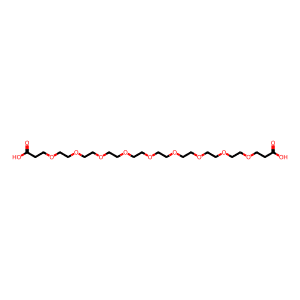
CAS:Bis-dPEG®9-Acid is a PEG polymer categorised as heterobifunctional PEG (X-PEG-Y). Used as a linker, bis-dPEG®9-Acid is used as a non-cleavable linker to attach PEG to proteins, peptides, oligonucleotides, nanoparticles and small molecules via pegylation, a bioconjugation technique. It provides flexibility and enhanced solubility.Formula:C22H42O13Purity:Min. 95%Molecular weight:514.56 g/molm-dPEG®12-TFP Ester
CAS:m-dPEG®12-TFP Ester is a PEG compound with two different functional groups (also known as heterobifunctional). Unlike homobifunctional PEG compounds (same functional group on both ends), this type of compounds are more versatile as have two different anchor points. m-dPEG®12-TFP Ester is used as a linker and spacer to add a PEG moiety, via pegylation (a bioconjugation technique) to proteins, peptides, oligonucleotides, small molecules and nanoparticles.
Formula:C60H118O32Purity:Min. 95%Molecular weight:1,395.61 g/mol