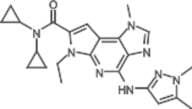
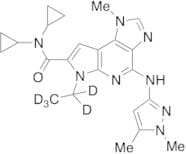
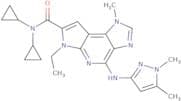
CAS 1271022-90-2
:BMS-911543
Description:
BMS-911543, with the CAS number 1271022-90-2, is a small molecule that has been investigated primarily for its potential therapeutic applications in the treatment of various diseases, particularly in the context of cancer. It acts as a selective inhibitor of certain protein kinases, which are crucial in regulating cellular processes such as growth, proliferation, and survival. The compound's mechanism of action typically involves the modulation of signaling pathways that are often dysregulated in cancer cells. BMS-911543 has shown promise in preclinical studies, demonstrating efficacy in inhibiting tumor growth and enhancing the effects of other therapeutic agents. Its pharmacokinetic properties, including absorption, distribution, metabolism, and excretion, are essential for determining its suitability for clinical use. As with many investigational drugs, ongoing research is necessary to fully understand its safety profile, optimal dosing regimens, and potential side effects. Overall, BMS-911543 represents a significant area of interest in the field of targeted cancer therapy.
Sort by
Purity (%)
0
100
|
0
|
50
|
90
|
95
|
100
Found 5 products.
Imidazo[4,5-d]pyrrolo[2,3-b]pyridine-7-carboxamide, N,N-dicyclopropyl-4-[(1,5-dimethyl-1H-pyrazol-3-yl)amino]-6-ethyl-1,6-dihydro-1-methyl-
CAS:Formula:C23H28N8OPurity:98%Color and Shape:SolidMolecular weight:432.5214BMS-911543
CAS:BMS-911543 is a potent and selective inhibitor of JAK2 with IC50 of 1.1 nM, ~350-, 75- and 65-fold selective to JAK1, JAK3 and TYK2, respectively. Phase 1/2.Formula:C23H28N8OPurity:97.69% - 99.98%Color and Shape:SolidMolecular weight:432.52BMS-911543
CAS:BMS-911543 is a selective inhibitor of cyclin-dependent kinases (CDKs), which is a product of Bristol-Myers Squibb. It originates from extensive research aiming to target the dysregulated cell cycle processes often found in cancer cells. BMS-911543 works by inhibiting specific CDKs, which are crucial regulators of cell cycle progression, particularly affecting CDK2 and CDK9. This mode of action interferes with the cyclin-CDK complex's ability to phosphorylate target substrates, ultimately inducing cell cycle arrest and promoting apoptosis in susceptible cancer cells.Formula:C23H28N8OPurity:Min. 95%Molecular weight:432.52 g/mol
![Imidazo[4,5-d]pyrrolo[2,3-b]pyridine-7-carboxamide, N,N-dicyclopropyl-4-[(1,5-dimethyl-1H-pyrazol-…](/_next/image/?url=https%3A%2Fstatic.cymitquimica.com%2Fproducts%2FIN%2Fthumb%2FDA000WNT.jpg&w=3840&q=75)