CAS 127103-11-1
:acetyl-ser-asp-lys-pro
Description:
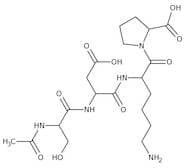
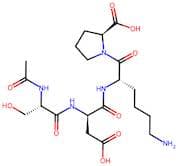
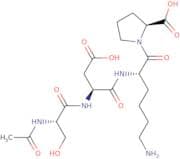
Acetyl-ser-asp-lys-pro, also known by its CAS number 127103-11-1, is a synthetic peptide that consists of a sequence of amino acids: acetylated serine, aspartic acid, lysine, and proline. This compound is characterized by its acetylation at the N-terminus, which can enhance its stability and bioavailability compared to its non-acetylated counterparts. Peptides like acetyl-ser-asp-lys-pro are often studied for their potential biological activities, including roles in signaling pathways, modulation of enzyme activity, and influence on cellular processes. The specific sequence of amino acids contributes to its unique properties, including solubility, reactivity, and interaction with biological targets. Such peptides may be utilized in research, therapeutic applications, or as components in drug development. However, detailed studies are necessary to fully understand its pharmacological effects and potential applications in medicine or biotechnology.
Formula:C20H33N5O9
Synonyms:- Ac-Ser-Asp-Lys-Pro-OH
Sort by
Purity (%)
0
100
|
0
|
50
|
90
|
95
|
100
Found 4 products.
N-Acetyl-Ser-Asp-Lys-Pro
CAS:N-Acetyl-Ser-Asp-Lys-Pro inhibits the entry of pluripotent hemopoietic stem cells into S-phase of the cell cycle and protects against Ara-C lethality in mice. It is a specific substrate for the N-terminal active site of angiotensin converting enzyme, which is responsible for its degradation in vivo.Formula:C20H33N5O9Color and Shape:White, Lyophilized PowderMolecular weight:487.51N-Acetyl-Ser-Asp-Lys-Pro
CAS:Acetyl Ser-Asp-Lys-Pro, derived from thymosin β4 in bone marrow, blocks stem cell cycle progression and shields mice from Ara-C toxicity.Formula:C20H33N5O9Purity:99.85%Color and Shape:SolidMolecular weight:487.5Ac-Ser-Asp-Lys-Pro-OH
CAS:Ac-Ser-Asp-Lys-Pro-OH is a tetrapeptide that has been shown to stimulate the growth of cells in vitro. It has been found to inhibit the production of interleukin-1β and tumor necrosis factor α, which are cytokines that are involved in inflammation. Ac-Ser-Asp-Lys-Pro-OH stimulates the production of growth factor β1 and collagen, which may be due to its ability to bind to toll like receptor 4 (TLR4). Acetylserotonin has been shown to have antiinflammatory and antifibrotic properties in animal models. Acetylserotonin also inhibits cancer cell growth and reduces drug resistance.
Formula:C20H33N5O9Purity:Min. 95%Molecular weight:487.5 g/mol