CAS 1289197-78-9
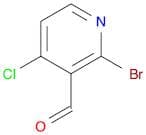
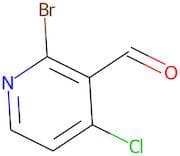
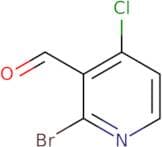
:2-bromo-4-chloronicotinaldehyde
Description:
2-Bromo-4-chloronicotinaldehyde is an organic compound characterized by its heterocyclic structure, which includes a pyridine ring with both bromine and chlorine substituents. The presence of the aldehyde functional group contributes to its reactivity, making it useful in various chemical syntheses. This compound typically exhibits moderate solubility in organic solvents, reflecting its polar nature due to the aldehyde group. Its molecular structure suggests potential applications in medicinal chemistry, particularly in the development of pharmaceuticals, as halogenated compounds often exhibit unique biological activities. Additionally, the presence of both bromine and chlorine can influence the compound's electronic properties, potentially enhancing its reactivity in nucleophilic substitution reactions. Safety data indicates that, like many halogenated compounds, it should be handled with care due to potential toxicity and environmental concerns. Overall, 2-bromo-4-chloronicotinaldehyde is a valuable compound in synthetic organic chemistry, with implications for further research and application in various fields.
- 2-Bromo-4-chloropyridine-3-carboxaldehyde
- 3-Pyridinecarboxaldehyde, 2-bromo-4-chloro-
- 3-PYRIDINECARBOXALDEHYDE, 2-BROMO-5-CHLORO-
- 2-bromo-4-chloropyridine-3-carbaldehyde
Sort by
Purity (%)
0
100
|
0
|
50
|
90
|
95
|
100
Found 4 products.
3-Pyridinecarboxaldehyde, 2-bromo-4-chloro-
CAS:Formula:C6H3BrClNOPurity:95%Color and Shape:SolidMolecular weight:220.45112-Bromo-4-chloronicotinaldehyde
CAS:2-Bromo-4-chloronicotinaldehydePurity:99%Molecular weight:220.45g/mol2-Bromo-4-chloropyridine-3-carboxaldehyde
CAS:2-Bromo-4-chloropyridine-3-carboxaldehyde is a synthetic compound that has been shown to inhibit the kinase activity of the tyrosine kinase receptor, a protein that regulates cell growth and differentiation. It was developed as a potential treatment for autoimmune diseases, including erythematosus and rheumatoid arthritis. This drug has been studied in clinical trials as an oral agent with good pharmacokinetic properties and was found to be safe and well tolerated at doses up to 1000mg per day. These studies have shown promising results in early phase 2 clinical trials.Formula:C6H3BrClNOPurity:Min. 95%Molecular weight:220.45 g/mol