CAS 130106-42-2
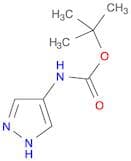
:Carbamic acid, 1H-pyrazol-4-yl-, 1,1-dimethylethyl ester (9CI)
Description:
Carbamic acid, 1H-pyrazol-4-yl-, 1,1-dimethylethyl ester, also known by its CAS number 130106-42-2, is an organic compound characterized by its carbamate functional group, which is derived from carbamic acid. This compound features a pyrazole ring, a five-membered heterocyclic structure containing two nitrogen atoms, contributing to its unique chemical properties. The presence of the tert-butyl group (1,1-dimethylethyl) enhances its lipophilicity, potentially influencing its solubility and reactivity in various environments. The compound may exhibit biological activity, making it of interest in pharmaceutical research and agrochemical applications. Its stability and reactivity can be affected by factors such as pH and temperature, which are crucial for its handling and storage. As with many carbamates, it may also be subject to hydrolysis, leading to the release of the corresponding amine and carbon dioxide under certain conditions. Safety data should be consulted to understand its toxicity and environmental impact, as with any chemical substance.
Formula:C8H13N3O2
Sort by
Purity (%)
0
100
|
0
|
50
|
90
|
95
|
100
Found 4 products.
Carbamic acid, 1H-pyrazol-4-yl-, 1,1-dimethylethyl ester (9CI)
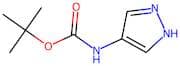
CAS:Formula:C8H13N3O2Purity:97%Color and Shape:SolidMolecular weight:183.2077tert-Butyl (1H-pyrazol-4-yl)carbamate
CAS:tert-Butyl (1H-pyrazol-4-yl)carbamatePurity:97%Molecular weight:183.211g/molTert-butyl-(1H-pyrazol-4-yl)carbamate
CAS:Tert-butyl-(1H-pyrazol-4-yl)carbamate is a potent inhibitor of protein kinases. It has been shown to inhibit the activity of casein kinase II in vitro, with an IC50 value of 0.2 μM. This drug also has immunosuppressive properties and can be used to treat immunodeficiencies such as HIV infection and leukemia. Tert-butyl-(1H-pyrazol-4-yl)carbamate inhibits inflammation by inhibiting the enzyme phospholipase A2, which is involved in the production of prostaglandins and leukotrienes. This inhibition leads to decreased levels of proinflammatory mediators that are associated with pain, swelling, and fever.Formula:C8H13N3O2Purity:Min. 95%Molecular weight:183.21 g/mol