CAS 130348-99-1
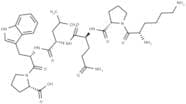
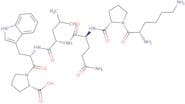
:C-reactive protein fragment 201-206
Description:
C-reactive protein fragment 201-206, associated with the CAS number 130348-99-1, is a peptide derived from C-reactive protein (CRP), which is an acute-phase protein produced by the liver in response to inflammation. This specific fragment consists of a sequence of amino acids that plays a role in the immune response and inflammation regulation. Characteristically, it is hydrophilic, which influences its solubility in aqueous environments, and it may exhibit immunogenic properties, potentially eliciting an immune response. The fragment is often studied in the context of inflammatory diseases and may serve as a biomarker for various conditions, including infections and autoimmune disorders. Its structure and function can provide insights into the mechanisms of inflammation and the body's response to injury or infection. Additionally, the fragment's interactions with other proteins and cells in the immune system are of significant interest in both clinical and research settings.
Formula:C38H57N9O8
Synonyms:- C-Reactive Protein (CRP) (201-206)
- H-Lys-Pro-Gln-Leu-Trp-Pro-OH
- C-Reactive Protein (201-206)
Sort by
Purity (%)
0
100
|
0
|
50
|
90
|
95
|
100
Found 2 products.
C-Reactive Protein (CRP) (201-206)
CAS:C-Reactive Protein (CRP) (201-206) is the peptide fragment of C-Reactive Protein. CRP is a cardiovascular risk marker and may promote atherogenesis.Formula:C38H57N9O8Purity:98%Color and Shape:SolidMolecular weight:767.91C-Reactive Protein (CRP) (201-206)
CAS:C-reactive protein (CRP) is a protein that is synthesized by the liver in response to inflammation. It has a variety of functions, including the regulation of energy metabolism and glycolysis. CRP also has a role in regulating production of neutrophil chemotactic factors, cytokines, and reactive oxygen species. In addition, it binds to zymosan and can be used as an inflammatory marker in medical diagnostics. The amino acid sequence for CRP was first determined in 1971. The primary structure for CRP consists of two alpha helices connected by two beta strands. Its tertiary structure consists of four alpha helices that are connected through loops and turns by three beta sheets with an additional loop connecting one helix to the other strand. CRP contains no disulfide bonds or hydrophobic interactions; instead, it relies on hydrogen bonds to maintain its shape.br>br>Formula:C38H57N9O8Purity:Min. 95%Molecular weight:767.92 g/mol