CAS 13036-50-5
:Pyrimidine, 2-chloro-4-phenyl-
Description:
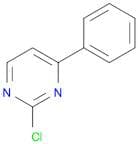
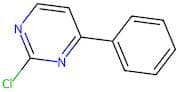
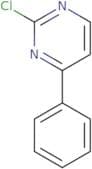
Pyrimidine, 2-chloro-4-phenyl- is an organic compound characterized by a pyrimidine ring, which is a six-membered heterocyclic structure containing two nitrogen atoms at positions 1 and 3. The presence of a chlorine atom at the 2-position and a phenyl group at the 4-position contributes to its unique chemical properties. This compound is typically a colorless to pale yellow liquid or solid, depending on its state at room temperature. It is known for its potential applications in pharmaceuticals and agrochemicals due to its ability to act as a building block in the synthesis of various biologically active molecules. The chlorine substituent can influence the compound's reactivity and solubility, while the phenyl group can enhance its lipophilicity. Pyrimidine derivatives are often studied for their role in nucleic acid chemistry and as intermediates in organic synthesis. Safety data should be consulted, as halogenated compounds can pose health risks and environmental concerns.
Formula:C10H7ClN2
InChI:InChI=1/C10H7ClN2/c11-10-12-7-6-9(13-10)8-4-2-1-3-5-8/h1-7H
SMILES:c1ccc(cc1)c1ccnc(Cl)n1
Synonyms:- 2-Chloro-4-phenylpyrimidine
- 2-Chloro-4-phenyl-pyrimidine
Sort by
Purity (%)
0
100
|
0
|
50
|
90
|
95
|
100
Found 4 products.
Pyrimidine, 2-chloro-4-phenyl-
CAS:Formula:C10H7ClN2Purity:98%Color and Shape:SolidMolecular weight:190.62902-Chloro-4-phenylpyrimidine
CAS:2-Chloro-4-phenylpyrimidineFormula:C10H7ClN2Purity:98%Color and Shape:PowderMolecular weight:190.63g/mol2-Chloro-4-phenylpyrimidine
CAS:Formula:C10H7ClN2Purity:98%Color and Shape:SolidMolecular weight:190.632-Chloro-4-phenylpyrimidine
CAS:2-Chloro-4-phenylpyrimidine (2CP) is a molecule that has been shown to inhibit the growth of cancer cells. The proposed mechanism is that 2CP inhibits the synthesis of DNA and RNA, which leads to cellular death. 2CP also has anti-inflammatory properties, which may be due to its ability to induce corticotropin-releasing hormone (CRH). CRH is a hormone that regulates the release of corticosteroids from the adrenal glands. This is thought to be due to its ability to inhibit the production of the enzyme anthranilic acid, which is involved in the synthesis of CRH. 2CP was synthesized by diazotization and then irradiation with UV light. It can be used as an anticancer agent against cancer cells in vitro.Formula:C10H7ClN2Purity:Min. 95%Molecular weight:190.63 g/mol