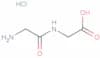
CAS 13059-60-4
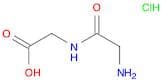
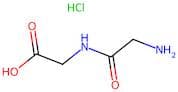
:Glycylglycine hydrochloride
Description:
Glycylglycine hydrochloride is a dipeptide and a derivative of glycine, consisting of two glycine molecules linked by a peptide bond, with a hydrochloride salt form. It is a white to off-white crystalline powder that is soluble in water, making it suitable for various biochemical applications. This compound is often used in peptide synthesis, as a buffering agent in biochemical assays, and in the study of protein interactions due to its zwitterionic nature, which allows it to exist in both cationic and anionic forms depending on the pH. Glycylglycine hydrochloride is generally stable under standard laboratory conditions but should be stored in a cool, dry place to prevent degradation. Its low molecular weight and simple structure make it an important building block in the synthesis of more complex peptides and proteins. Additionally, it has applications in pharmaceuticals and research, particularly in studies related to amino acid metabolism and protein folding.
Formula:C4H8N2O3·ClH
InChI:InChI=1S/C4H8N2O3.ClH/c5-1-3(7)6-2-4(8)9;/h1-2,5H2,(H,6,7)(H,8,9);1H
InChI key:InChIKey=YHBAZQDEMYQPJL-UHFFFAOYSA-N
SMILES:C(NCC(O)=O)(CN)=O.Cl
Synonyms:- 2-(2-Aminoacetamido)acetic acid hydrochloride
- Glycine, N-glycyl-, monohydrochloride
- Glycine, glycyl-, hydrochloride (1:1)
- Glycine, glycyl-, monohydrochloride
- Glycyl-glycine hydrochloride
- Glycylglycine Hydrochloride (1:1)
- Glycylglycine hydrochloride
- Glycylglycine monohydrochloride
Sort by
Purity (%)
0
100
|
0
|
50
|
90
|
95
|
100
Found 5 products.
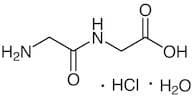
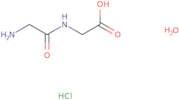
Glycylglycine Hydrochloride Monohydrate
CAS:Formula:C4H8N2O3·HCl·H2OPurity:>98.0%(N)Color and Shape:White to Almost white powder to crystalMolecular weight:186.60Glycylglycine Hydrochloride Monohydrate
CAS:Glycylglycine hydrochloride monohydrate is a glycine salt that can be used as a metal chelator. It has been shown to be an experimental model for the study of metal-binding proteins, and it can also be used as a model system for the study of benzalkonium chloride. Glycylglycine hydrochloride monohydrate has been shown to have thermodynamic data and biological studies. In vitro assays have been used to show its transfer reactions with other molecules, such as intermolecular hydrogen bonding and coordination geometry. Synchronous fluorescence has also been used to investigate the energy metabolism of glycylglycine hydrochloride monohydrate in solution.Formula:C4H8N2O3·HCl·H2OPurity:Min. 95%Molecular weight:186.6 g/mol