CymitQuimica logo

CAS 13059-63-7

:

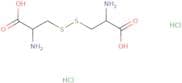
L-Cystine, radical ion(1+), dihydrochloride

Description:
L-Cystine, radical ion (1+), dihydrochloride is a derivative of the amino acid cysteine, characterized by the presence of a disulfide bond between two cysteine molecules. This compound typically exists as a dication due to the protonation of its amino groups, and the dihydrochloride form indicates the presence of two hydrochloride ions associated with the molecule. L-Cystine plays a crucial role in protein structure and function, particularly in the formation of disulfide bridges that stabilize protein conformation. The radical ion designation suggests that it may have unpaired electrons, which can impart unique reactivity and properties, making it of interest in various biochemical and pharmacological contexts. It is soluble in water, and its stability can be influenced by pH and temperature. As a compound, L-Cystine is involved in redox reactions and may have implications in oxidative stress and cellular signaling pathways. Its CAS number, 13059-63-7, is a unique identifier that facilitates its identification in chemical databases and literature.
Formula:C6H12N2O4S2·2ClH
InChI:InChI=1S/C6H12N2O4S2.2ClH/c7-3(5(9)10)1-13-14-2-4(8)6(11)12;;/h3-4H,1-2,7-8H2,(H,9,10)(H,11,12);2*1H
InChI key:InChIKey=HHGZUQPEIHGQST-UHFFFAOYSA-N
SMILES:C(CSSCC(C(O)=O)N)(C(O)=O)N.Cl
Synonyms:
  • L-Cystine, radical ion(1+), dihydrochloride
Sort by

Purity (%)
0
100
|
0
|
50
|
90
|
95
|
100
Found 2 products.
  • 2-amino-3-[(2-amino-2-carboxyethyl)disulfanyl]propanoic acid dihydrochloride

    CAS:
    Formula:C6H14Cl2N2O4S2
    Purity:98%
    Color and Shape:Solid
    Molecular weight:313.2224

    Ref: IN-DA000UOT

    1g
    29.00€
    5g
    40.00€
    25g
    70.00€
    100g
    111.00€
    500g
    235.00€
  • L-Cystine dihydrochloride

    CAS:

    L-Cystine dihydrochloride is a white crystalline powder that is used to treat acute radiation syndrome. It is an amino acid that contains two cysteine residues linked by a disulfide bond. Cysteine is necessary for the formation of proteins and peptides, which are important in antibody production. L-Cystine dihydrochloride has been shown to increase the uptake of radioactive substances in cells. This drug also increases the amount of bioactive molecules such as glutathione, which protects cells from oxidative damage caused by radiation. The effects of L-cystine dihydrochloride are dose dependent, with higher doses leading to greater cellular death.
    The unpaired cysteines in L-cystine dihydrochloride can react with each other, forming a new molecule called S-thiolactone. This reaction is catalyzed by porcine pancreatic lipase (PPLL), a membrane protein found in pancreat

    Formula:C6H14Cl2N2O4S2
    Purity:Min. 95%
    Molecular weight:313.2 g/mol

    Ref: 3D-NAA05963

    250g
    1,296.00€