CAS 1307-96-6
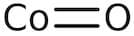
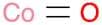
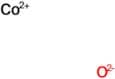
:Cobalt oxide (CoO)
- Cobalt Black
- Cobalt monooxide
- Cobalt monoxide
- Cobalt oxide (CoO)
- Cobalt(2+) oxide
- Cobalt(II) oxide
- Cobaltous Oxygen(-2) Anion
- Cobaltous oxide
- Cobaltous oxide (CoO)
- Cobaltoxid
- Fco 178
- Kobalt(Ii)-Oxid
- Oxido De Cobalto
- Oxocobalt
- Oxyde de cobalt
- Zaffre
- C.I. Pigment Black 13
- See more synonyms
Cobalt(II) oxide, 99.995% (metals basis)
CAS:Cobalt(II) oxide is widely used in the ceramic industry. It is an additive to create blue-colored glazes and enamels. It finds application in the manufacture of magnetic and electronic component materials. This Thermo Scientific Chemicals brand product was originally part of the Alfa Aesar productFormula:CoOPurity:99.995%Color and Shape:Powder, Green-brownMolecular weight:74.93Cobalt(II) oxide, 95%
CAS:Gallium(III) oxide is used in vacuum deposition. It is useful for making semiconductor devices, gallium-alumina catalyst, gas sensors, luminescent phosphors and dielectric coatings of solar cells. It shows potential for developing deep-ultraviolet TCOs (Transparent Conductive Oxides) and transparenFormula:CoOPurity:95%Molecular weight:74.93Cobalt(II) oxide
CAS:Cobalt is a transition metal with the atomic number 27. It has an oxidation state of +2 and belongs to group 8 on the periodic table. Cobalt(II) oxide (CoO) is a black solid that can be formed by heating cobalt metal at temperatures greater than 1400°C. The electrochemical impedance spectroscopy of CoO shows that it has high resistivity and good electrical conductivity, making it useful for corrosion protection. Cobalt oxide is also used as a catalyst in chemical reactions, such as oxidation and reduction, due to its redox potential. Cobalt oxide can be produced from the reaction between hydrochloric acid and zirconium oxide by electrolysis, which produces an electric current. This process can be done in two ways: either by using an electrochemical cell or by laser ablation. The latter method is more efficient because it requires less energy input than using an electrochemical cell. In addition, CoO particles are spherical in shape, have
Formula:CoOPurity:75%MinColor and Shape:PowderMolecular weight:74.93 g/molCobalt oxide-molybdenum oxide on alumina (3.5% CoO, 14% MoO₃)
CAS:Cobalt oxide-molybdenum oxide on alumina (3.5% CoO, 14% MoO3)
Formula:CoO/MoO3/Al2O3Color and Shape:1/8'' extrusionsMolecular weight:74.92811