CAS 13138-78-8
:1-METHYL-4-NITRO-1H-PYRROLE-2-CARBOXYLIC ACID
Description:
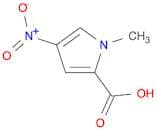
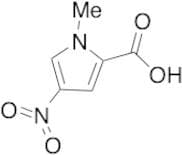
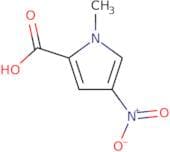
1-Methyl-4-nitro-1H-pyrrole-2-carboxylic acid, with the CAS number 13138-78-8, is an organic compound characterized by its pyrrole ring structure, which is a five-membered aromatic heterocycle containing nitrogen. This compound features a methyl group and a nitro group at the 1 and 4 positions, respectively, along with a carboxylic acid functional group at the 2 position. The presence of the nitro group contributes to its electron-withdrawing properties, influencing its reactivity and potential applications in organic synthesis. The carboxylic acid group imparts acidic characteristics, allowing for potential interactions with bases and other nucleophiles. This compound may exhibit biological activity, making it of interest in medicinal chemistry and pharmaceutical research. Its solubility and stability can vary depending on the solvent and environmental conditions. Overall, 1-methyl-4-nitro-1H-pyrrole-2-carboxylic acid is a versatile compound with potential applications in various fields, including organic synthesis and drug development.
Formula:C6H6N2O4
InChI:InChI=1/C6H6N2O4/c1-7-3-4(8(11)12)2-5(7)6(9)10/h2-3H,1H3,(H,9,10)
SMILES:Cn1cc(cc1C(=O)O)N(=O)=O
Synonyms:- Iflab-Bb F2124-0630
Sort by
Purity (%)
0
100
|
0
|
50
|
90
|
95
|
100
Found 3 products.
1-Methyl-4-nitropyrrole-2-carboxylic Acid
CAS:Controlled ProductApplications 1-Methyl-4-nitropyrrole-2-carboxylic Acid is used in the synthesis of Lexitropsin and distamycin analogs with antimicrobial activities.
References Anthony, N., et al.: J. Med. Chem., 50, 6116 (2007); Khalaf, A., et al.: J. Med. Chem., 47, 2133 (2004)Formula:C6H6N2O4Color and Shape:NeatMolecular weight:170.121-Methyl-4-nitro-1H-pyrrole-2-carboxylic acid
CAS:1-Methyl-4-nitro-1H-pyrrole-2-carboxylic acid is a molecule that has been shown to be cytotoxic to cancer cells. It interacts with the DNA at the sequences that are responsible for the production of amino acids and inhibits the synthesis of proteins. This drug also interacts with a chromophore, which is an organic molecule that absorbs light, and it can be conjugated to other molecules in order to increase its cytotoxicity. The anticancer activity of 1MNP was found to be bimodal, meaning it has different effects on different types of cancer cells.Formula:C6H6N2O4Purity:Min. 95%Molecular weight:170.12 g/mol