CAS 1314-13-2
:Zinc oxide (ZnO)
Description:
Zinc oxide (ZnO) is an inorganic compound that appears as a white powder or crystalline solid. It is known for its amphoteric nature, meaning it can react with both acids and bases. ZnO is insoluble in water but soluble in acids and alkalis, which allows it to participate in various chemical reactions. This compound exhibits a wide range of properties, including UV absorption, making it a popular ingredient in sunscreens and cosmetics for its protective qualities against harmful ultraviolet radiation. Additionally, ZnO has semiconducting properties, which enable its use in electronic devices, sensors, and as a catalyst in various chemical processes. It also possesses antibacterial and antifungal properties, making it useful in medical applications, such as ointments and creams for skin irritations. In terms of safety, ZnO is generally considered non-toxic, although inhalation of its dust can cause respiratory irritation. Overall, zinc oxide is a versatile compound with applications spanning multiple industries, including pharmaceuticals, cosmetics, and electronics.
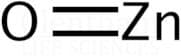
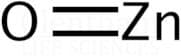
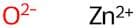
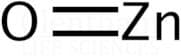
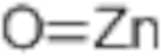
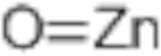
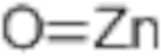
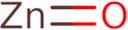
Formula:OZn
InChI:InChI=1S/O.Zn
InChI key:InChIKey=XLOMVQKBTHCTTD-UHFFFAOYSA-N
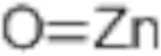
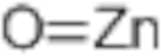
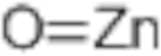
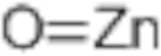
SMILES:O=[Zn]
Synonyms:- 503R
- 720C
- 8415Cy
- AZO
- Amalox
- Anyzon
- Az-Sw
- Azo-A
- Azo-B
- Azo-Bs
- Azodox
- BTs-OM
- EPM
- FX
- FZO
- Fc-Mi-W
- Finex-30S-LPT
- Finex-30W-LP
- Fp-Z
- Fx-Ufz-D
- GinRei
- Hb-Pz001
- Lpzinc
- NDM
- NanoX
- Naoazo
- Outmine
- Ozide
- Ozlo
- PZ
- Panatetra
- Pi-Kem
- Rgt-Z
- Sachtotec
- Shoe-Cleanse
- Siloxactif
- T-ZnOw
- TZO
- Whiteseal
- Zinca
- Zincia
- Zincoid
- Zinkicide
- Zinkoxid
- Zinvisible
- ZnO-CX
- Znap
- π-KEM
- azo-66tt
- azo-55tt
- azo22
- ai3-00277
- akro-zincbar90
- active zinc oxide
- zine white
- oxozinc
- activox
- ZNO
- azo-33
- zinci oxidum
- azo-66
- actox14
- activox b
- Zinc oxide (ZnO)
- zine oxide
- zinc oxygen(-2) anion
- zinkoxyd aktiv
- zinc white
- Zinc oxide
- C.I. 77947
- C.I. Pigment White 4
- zincoxideheavy
- zincoxide
- actox16
- actox216
- azo-55
- akro-zincbar85
- Flowers of zinc
- See more synonyms
Sort by
Purity (%)
0
100
|
0
|
50
|
90
|
95
|
100
Zinc Oxide (20wt% in water)
CAS:Formula:ZnOColor and Shape:White to pale yellow dispersionMolecular weight:81.37Zinc oxide, 99.5%, Ph. Eur., USP grade
CAS:Formula:ZnOPurity:99.0 - 100.5 % (ZnO calculated on ignited substance)Color and Shape:White powderMolecular weight:81.37Zinc(II) oxide
CAS:<p>Zinc(II) oxide</p>Formula:·Zn·OPurity:99.9%Color and Shape:Off-White SolidMolecular weight:81.41g/molZinc oxide, Nanopowder, 99.9%
CAS:Formula:ZnOPurity:≥ 99.9%Color and Shape:White powderMolecular weight:81.37Zinc oxide, 99.9%
CAS:Formula:ZnOPurity:≥ 99.9% (trace metals basis)Color and Shape:White or almost white powderMolecular weight:81.37Zinc oxide, 99.999%
CAS:Formula:ZnOPurity:≥ 99.999%Color and Shape:White to off-white powderMolecular weight:81.37Zinc Oxide
CAS:<p>Applications Zinc Oxide, has numerous applicaltions. It is widely used as an additive in many materials and products including plastics, ceramics, glass, cement, lubricants, etc.<br> Not a dangerous good if item is equal to or less than 1g/ml and there is less than 100g/ml in the package<br>References Hernandezbattez, A., et al.: Wear, 265 (3-4), 422 (2008);<br></p>Formula:ZnOColor and Shape:NeatMolecular weight:81.41Zinc oxide, 99.7%
CAS:<p>Zinc oxide, 99.7%</p>Formula:ZnOPurity:99.7%Color and Shape:white pwdr. (mean particle size 0.31 microns)Molecular weight:81.37Zinc oxide (99.999%-Zn) PURATREM
CAS:<p>Zinc oxide (99.999%-Zn) PURATREM</p>Formula:ZnOPurity:(99.999%-Zn)Color and Shape:white pwdr.Molecular weight:81.37Zinc oxide (99.9995%-Zn) PURATREM
CAS:Formula:ZnOPurity:99.9995%-ZnColor and Shape:white pwdr.Molecular weight:81.37Zinc Oxide Nanopowder (Type II), 240nm, 99.999%
CAS:Formula:ZnOPurity:min. 99.999 %Color and Shape:White, PowderMolecular weight:81.38Zinc Oxide Nanodispersion Type B-Anionic (70nm), 50% in water
CAS:Formula:ZnOColor and Shape:White, Colloidal dispersion withAnionic dispersantMolecular weight:81.38Zinc Oxide Nanodispersion Type C-Cationic (70nm), 50% in water
CAS:Formula:ZnOColor and Shape:White, Colloidal dispersion with cationic dispersantMolecular weight:81.38Zinc Oxide extrapure, 99%
CAS:Formula:ZnOPurity:min. 99%Color and Shape:White, Amorphous powder, ClearMolecular weight:81.38Zinc Oxide Nanodispersion Type A-Nonionic (70nm), 50% in water
CAS:Formula:ZnOColor and Shape:White, Colloidal dispersion with Nonionic dispersantMolecular weight:81.38Zinc Oxide ACS, ExiPlus, Multi-Compendial, 99.5%
CAS:Formula:ZnOPurity:min. 99.5%Color and Shape:White, Amorphous powder, ClearMolecular weight:81.38Zinc Oxide ACS, 99.5%
CAS:Formula:ZnOPurity:min. 99.5%Color and Shape:White, Amorphous powder, ClearMolecular weight:81.38Zinc Oxide Nanopowder (Type I), 30nm, 99.9%
CAS:Formula:ZnOPurity:min. 99.9 %Color and Shape:White, PowderMolecular weight:81.38Zinc oxide
CAS:<p>Zinc oxide is a white, crystalline solid that has been used as an antimicrobial agent in the past. It is effective against bacteria, fungi, and viruses. The inhibitory properties of zinc oxide are due to its ability to disrupt energy metabolism. Zinc oxide also has been shown to be toxic to neurons in vitro and is under investigation for use in the treatment of neurodegenerative diseases such as Alzheimer's and Parkinson's disease. Zinc oxide is also used in wastewater treatment because it can bind up metal ions such as copper chloride or zirconium oxide. Zinc oxide nanoparticles have been shown to be effective at killing bacteria in water vapor when irradiated with laser light.</p>Formula:ZnOPurity:Min. 95%Color and Shape:White Clear LiquidMolecular weight:81.38 g/mol