CAS 13168-24-6
:3-O-ALPHA-D-GALACTOPYRANOSYL-D-GALACTOSE
Description:
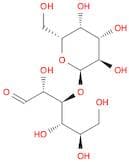
3-O-Alpha-D-galactopyranosyl-D-galactose, also known as galactosylgalactose, is a disaccharide composed of two galactose units linked by a glycosidic bond. This compound features an alpha configuration at the anomeric carbon of the first galactose unit, which influences its reactivity and interactions. It is a white to off-white solid that is soluble in water, reflecting the hydrophilic nature of its sugar components. The presence of multiple hydroxyl groups contributes to its ability to form hydrogen bonds, enhancing its solubility and reactivity in biological systems. This disaccharide is of interest in various fields, including biochemistry and food science, due to its potential prebiotic properties and role in cell recognition processes. Its CAS number, 13168-24-6, is a unique identifier that facilitates the search for information regarding its properties, synthesis, and applications. Overall, 3-O-alpha-D-galactopyranosyl-D-galactose is significant in the study of carbohydrates and their biological functions.
Formula:C12H22O11
InChI:InChI=1/C12H22O11/c13-1-3-5(15)7(17)8(18)12(22-3)23-10-6(16)4(2-14)21-11(20)9(10)19/h3-20H,1-2H2
SMILES:C(C1C(C(C(C(O1)OC1C(C(CO)OC(C1O)O)O)O)O)O)O
Synonyms:- Alpha-D-Gal-1,3-D-Gal
- Alpha1,3-Galactobiose
- 3-O-(A-D-Galactopyranosyl)-D-Galactose
- 3Alpha-Galactobiose
- Linear B Disaccharide
- Galactose Alpha1,3-Galactose
- Gal Alpha 1-3Gal
- 3-O-hexopyranosylhexopyranose
Sort by
Purity (%)
0
100
|
0
|
50
|
90
|
95
|
100
Found 4 products.
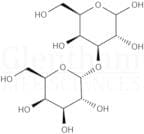
3-O-(-D-Galactopyranosyl)-D-Galactose
CAS:Formula:C12H22O11Color and Shape:SolidMolecular weight:342.29653-O-a-D-Galactopyranosyl-D-galactopyranose
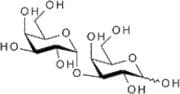
CAS:Formula:C12H22O11Purity:≥ 95.0%Color and Shape:Off-white to light yellow solidMolecular weight:342.343-O-(α-D-Galactopyranosyl)-D-galactopyranose
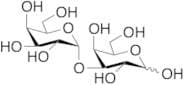
CAS:A carbohydrate, commonly known as alpha gal, found in most mammalian cell membranes. It is not found in primates, including humans, whose immune systems recognize it as a foreign body and produce xenoreactive immunoglobulin M antibodies, leading to organ rejection after transplantation. Anti-α gal immunoglobulin G antibodies are some of the most common in humans. Regular stimulation from gut flora, typically initiated within the first six months of life, leads to an exceptionally high titre of around 1% of all circulating IgG. Recent studies are showing increasing evidence that this allergy may be induced by the bite of the lone star tick (Amblyomma americanum) in North America and the castor bean tick (Ixodes ricincus) in Sweden.Formula:C12H22O11Purity:Min. 95 Area-%Color and Shape:PowderMolecular weight:342.3 g/mol3-O-(a-D-Galactopyranosyl)-D-galactose
CAS:Stability Hygroscopic
Applications 3-O-(α-D-Galactopyranosyl)-D-galactose (cas# 13168-24-6) is a compound useful in organic synthesis.
References Abramenko, I.V., et al.: Tsitologiya, 35 (5), 91 (1993), Kelly, R.F., et al.: Mol. Microbiol., 10 (3), 615 (1993), Stortz, C.A., et al.: J. Carbohydr. Chem., 13 (2), 235 (1994), Neethling, F.A., et al.: Transplantation, 57 (6), 959 (1994)Formula:C12H22O11Color and Shape:NeatMolecular weight:342.30